Water Restoration for Homes and Businesses in Crooked Creek
When water is spreading through your Crooked Creek home right now, Crooked Creek Water Restoration delivers fast, around the clock emergency response for burst pipes, sewage backups, and storm intrusion. Our IICRC certified crews handle the full job from extraction and structural drying through reconstruction, and we coordinate directly with your insurance carrier.
A missed call gets returned within 15 minutes, even when we're busy with another homeowner.


Crooked Creek Water Restoration provides emergency water removal and complete water damage restoration for Crooked Creek, IN homeowners: extraction, drying, cleanup, and reconstruction coordination, with 24/7 live dispatch and insurance claim support. Call (317) 342-7736.
- Services: water damage restoration, basement flooding, sewage cleanup, storm damage
- Service area: Crooked Creek, Marion County, IN and surrounding areas
- Response time: Same day for Crooked Creek inquiries; 24/7 emergency service available
- Licensed and insured (License #RC21100059)
- Serving Crooked Creek, IN since 2018
Schedule Your Free Damage Assessment
Inspection in a Crooked Creek home is a room by room walkthrough, not a glance and a quote. Walls get checked with non penetrating meters at multiple heights, baseboards and trim probed for wicking, subfloors tested through transition points, insulation pulled in suspect cavities, and the spaces behind cabinets, under sinks, around water heaters and washing machines, and along basement perimeters and slab joints all read for moisture. Tools include a thermal imaging camera to map hidden wet zones, a penetrating moisture meter to confirm readings inside the material, and a hygrometer logging ambient temperature and relative humidity. The reason we map this thoroughly across Crooked Creek properties is simple: hidden moisture left behind a wall is what fuels mold growth weeks later and turns a $4,000 job into a $20,000 one.
I agree to be contacted by Crooked Creek Water Restoration regarding my inquiry.
Water heater failures flood more Crooked Creek utility rooms and basements than storms do. Forty or fifty gallons finds every low spot, soaks the drywall behind it, and runs under adjacent flooring. Same day water cleanup keeps a routine appliance failure from turning into a flooring replacement.
The utility shutoffs come first. Electrical hazards, gas appliances near water, and compromised systems get assessed before anyone wades in. Safe Crooked Creek water damage response protects the family and the crew before it protects the drywall.
Every Crooked Creek water damage job from Crooked Creek Water Restoration comes with a written scope before work begins, daily moisture monitoring during the job, and itemized documentation at the end. Insurance carriers get what they need. Homeowners know what they’re paying for.
Payment Options That Work for You
We partner with established lenders so Crooked Creek Water Restoration clients can spread the cost of a major restoration project into manageable payments. Ask your project lead about current options.
Pay for your project at a later time, but lock in today's pricing. Ideal for homeowners waiting on insurance settlements.
- No payments for 12 months
- No interest if paid in full
- Lock in current pricing today
Divide your project cost equally across 12 months with zero interest. Most homeowners choose this option for predictable budgeting.
- Equal monthly payments
- 0% interest for 12 months
- Simple, predictable budgeting
Spread your investment over up to 20 years with fixed equal payments. The right choice for larger projects or homeowners who prefer lower monthly amounts.
- Up to 20-year terms available
- Fixed equal payments
- Ideal for larger restoration projects
Subject to credit approval. Ask your project lead for current terms and promotions.
The Crooked Creek Water Damage Restoration Scope
From pumping out standing water to putting the drywall back, these are the jobs our crews take on around Crooked Creek.
Water Damage Restoration in Crooked Creek
Serving Crooked Creek: full residential water damage restoration including extraction, structural drying, moisture verification, and reconstruction following IICRC S500 protocol. Applies to supply line failures, appliance overflows, storm intrusion, and other clean or gray water losses.
Learn moreBasement Flooding in Crooked Creek
For Crooked Creek addresses, response to flooded basements from sump pump failure, foundation seepage, sewer backup, or storm saturation. Includes water extraction, content evaluation, structural drying of walls and slab, and reconstruction of finished basement areas.
Learn moreSewage Cleanup in Crooked Creek
Serving Crooked Creek: category 3 black water response for sewer backups and contaminated water events. Includes containment, removal of affected porous materials, antimicrobial treatment, and full sanitization per IICRC S500 protocol.
Learn moreStorm Damage in Crooked Creek
In Crooked Creek, water damage restoration following severe storm events, including wind driven rain intrusion, flooding from saturated ground, and water entry through storm compromised openings. Extraction, drying, and reconstruction handled under one project.
Learn moreCommercial Water Restoration in Crooked Creek
For Crooked Creek addresses, water damage restoration for commercial properties including offices, retail, and multi tenant buildings. Scaled extraction and drying equipment with after hours scheduling to minimize business interruption.
Learn moreCommercial Flood Damage Cleanup in Crooked Creek
For Crooked Creek addresses, large scale flood response for commercial properties affected by storm flooding, plumbing failures, or sustained water events. Includes water removal, content management, structural drying, and coordinated reconstruction.
Learn moreCommercial Sewage Cleanup in Crooked Creek
Serving Crooked Creek: category 3 sewage response for commercial facilities with containment, biohazard handling, removal of contaminated materials, antimicrobial treatment, and verification before reopening to occupants.
Learn moreCommercial Mold Remediation in Crooked Creek
For Crooked Creek addresses, mold remediation for commercial buildings performed to IICRC S520 standard, including containment, HEPA filtration, contaminated material removal, antimicrobial application, and post remediation verification.
Learn moreCommercial Storm Damage in Crooked Creek
In Crooked Creek, storm related water damage response for commercial properties, addressing wind driven water intrusion, flooding, and resulting structural moisture issues through extraction, drying, and reconstruction.
Learn more
Local Expertise, Real Results
Certified protocol, logged readings, and reconstruction carried through to final walk through, the way restoration is supposed to work in Crooked Creek.
Every water restoration call in Crooked Creek runs the same protocol. restoration standards for water damage, S520 for mold remediation. Assessment first, scope written, insurance carrier notified, equipment placed, daily moisture readings, verification before rebuild. Crooked Creek Water Restoration handles Crooked Creek losses with one crew across the entire project.
Crooked Creek Water Restoration serves Crooked Creek and the surrounding Marion County neighborhoods with residential and commercial water damage restoration, from the brick ranches along the creek corridor out to Snacks-Guion Creek, Augusta-New Augusta, and College Park. The work we do is restoration only, water extraction, structural drying, sewage cleanup, mold remediation, storm damage response, and the reconstruction that follows. Crews are IICRC certified technicians on a licensed and insured payroll, not temp work crew pulled off a call list. Years of restoration work across Washington and Pike Townships means we know the failure patterns specific to Crooked Creek housing stock and the way water moves through these foundations.
Every Crooked Creek job follows the IICRC S500 standard for water damage restoration, with IICRC S520 applied any time mold remediation enters the scope. The sequence is consistent: initial moisture assessment using thermal imaging and penetrating meters, source identification, controlled extraction, then structural drying with monitored air movement and dehumidification sized to the affected square footage. Antimicrobial application goes down when the Category warrants it, and post drying verification confirms materials have reached dry standard before any reconstruction begins. The protocol exists because skipping moisture mapping is how a quick fix turns into a mold claim 30 days later.
Our Promise
Three commitments to Crooked Creek homeowners. First, fast emergency response dispatched day or night through our 24/7 line, because every hour without extraction expands the damage. Second, IICRC certified technicians working to the S500 standard, with documentation that holds up when your adjuster reviews the file. Third, a free on site inspection before any work begins, and full insurance coordination if you have an active claim, so you know the scope and the path forward before equipment goes in.
What Water Restoration Done Right Looks Like in Crooked Creek
Documented work, thorough moisture mapping, and pricing you see before equipment goes in, the standard Crooked Creek homeowners deserve when a restoration crew shows up at the door.
Around the Clock Emergency Response
Burst supply lines and sewage backups do not wait for business hours, so our 24/7 emergency line stays open for Crooked Creek homeowners every night, weekend, and holiday. Trucks roll fully stocked with extraction equipment, dehumidifiers, and air movers. The faster water comes out, the smaller the eventual reconstruction scope.
IICRC S500 Certified Crews
Every water loss is handled to the IICRC S500 standard, which dictates how Category 1, 2, and 3 water are classified, contained, and dried. Technicians log meter readings, target dry standard against unaffected materials, and document the drying curve. That certification is what protects you when an adjuster reviews the file.
Mitigation Through Rebuild
Most Crooked Creek restoration jobs end in reconstruction, drywall, flooring, paint, and trim, and we carry that scope from start to finish. You are not getting handed off to a separate general contractor after the equipment comes out. One project, one schedule, one point of contact.
Insurance Coordination Done Right
We work with your insurance carrier directly, documenting affected areas with photos and moisture readings before mitigation begins so the scope is defensible. Most major insurance carriers expect prompt mitigation under the policy, and proper documentation is how Crooked Creek claims close cleanly. We work with your insurance carrier, and we make sure your adjuster has everything they need.
Real Jobs. Real Results.
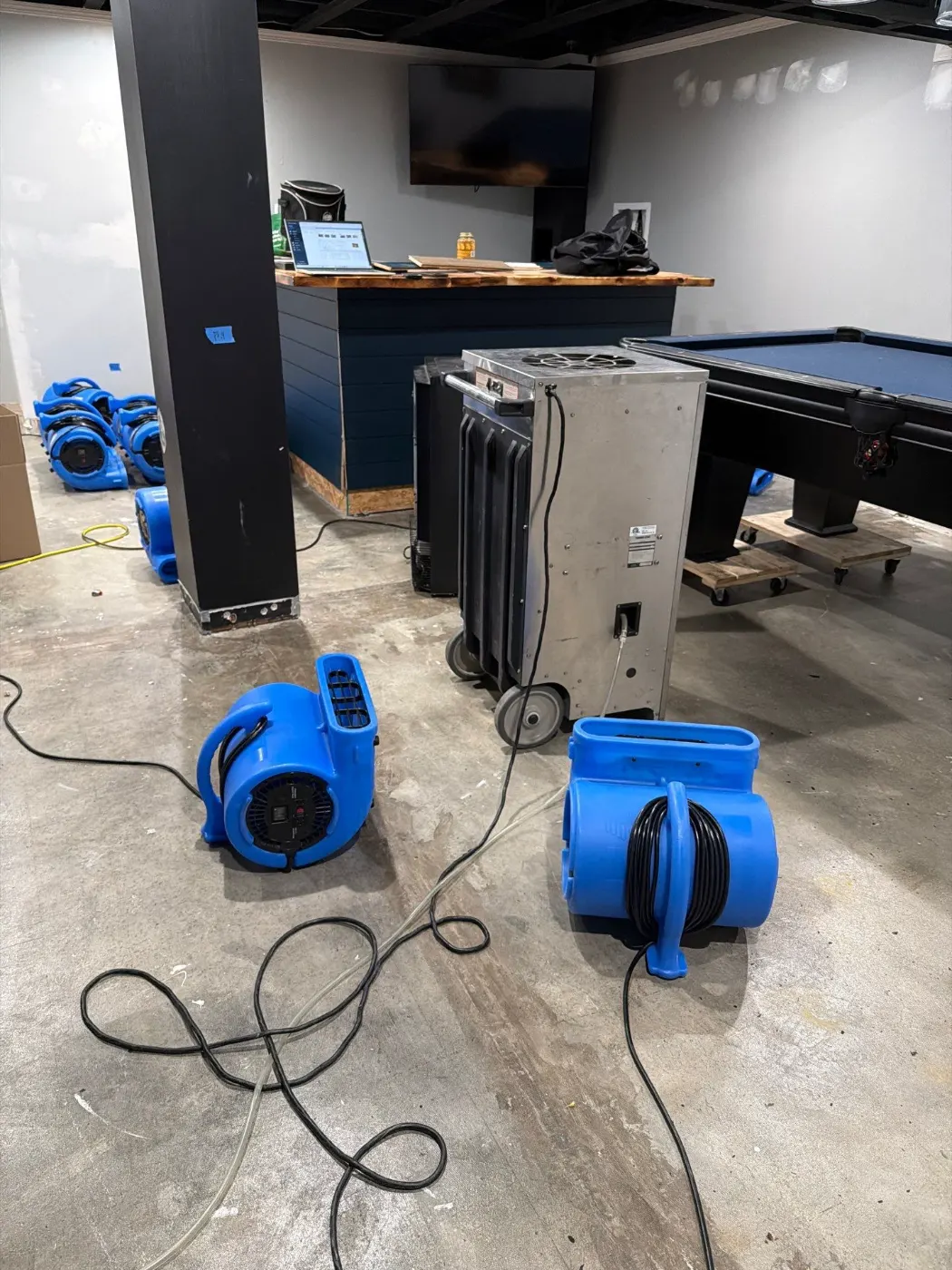
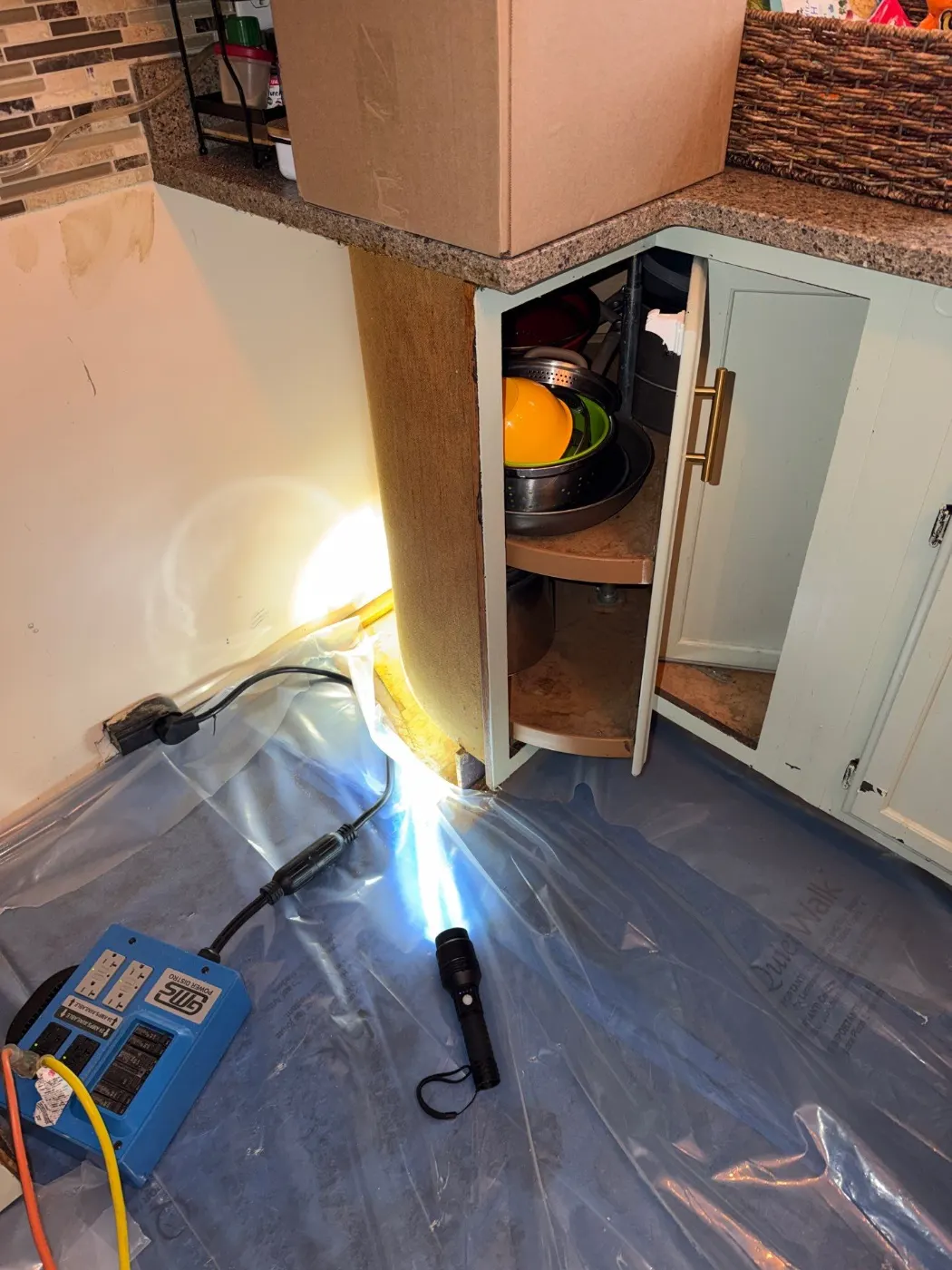
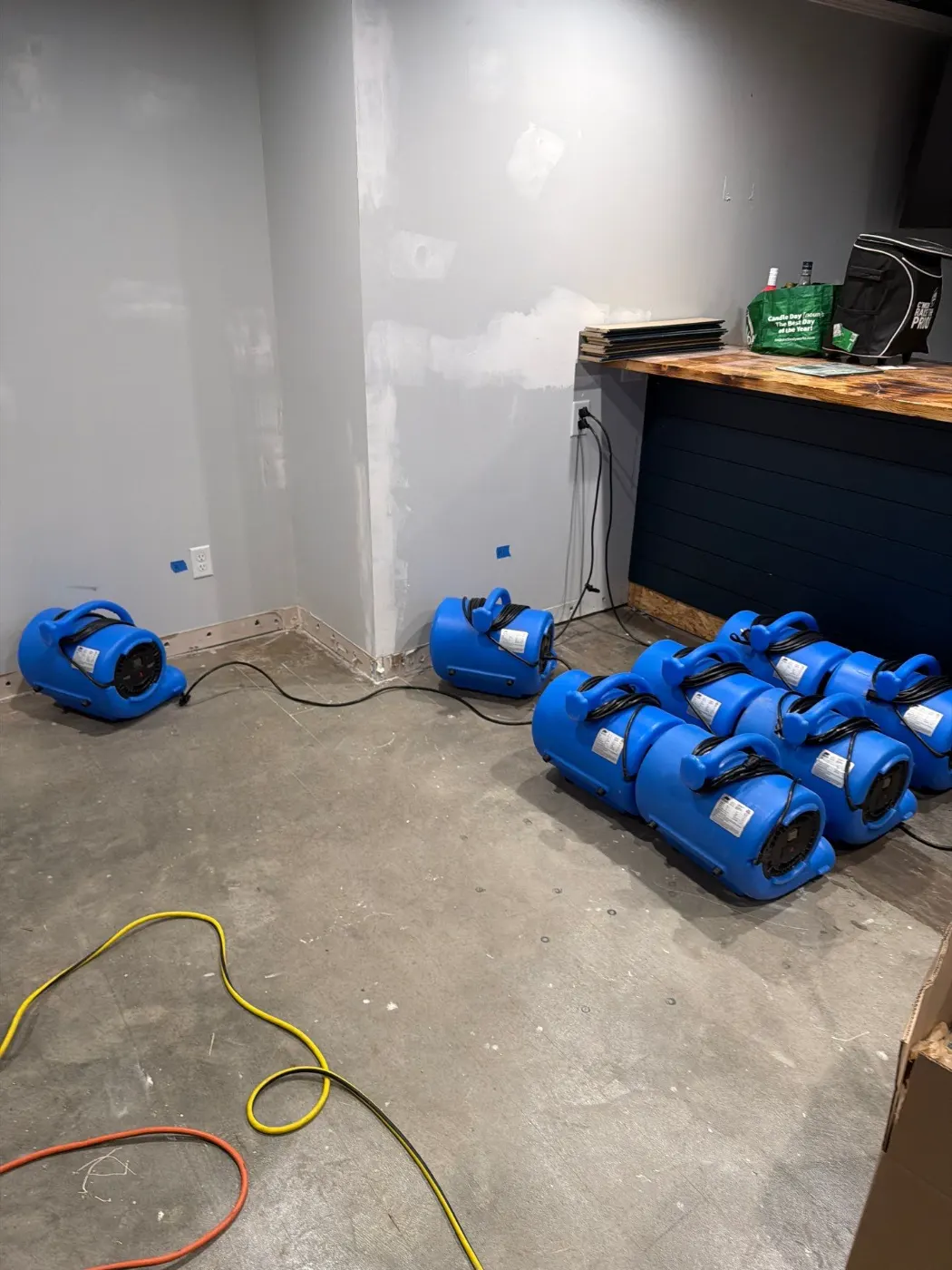
Real restoration jobs from Crooked Creek and across Marion County, documented from the first moisture reading through final reconstruction, so you can see what the work actually looks like before you call.
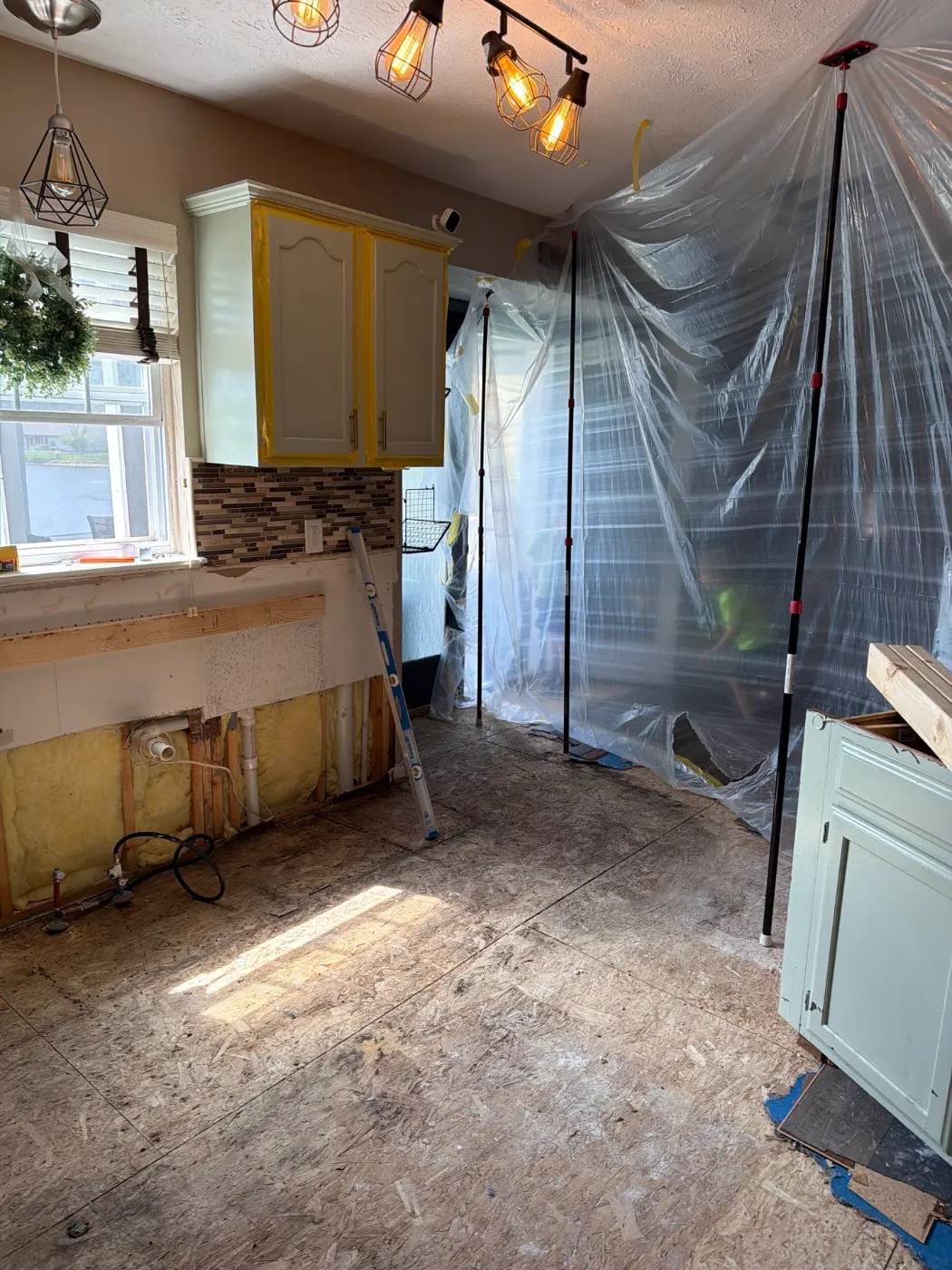
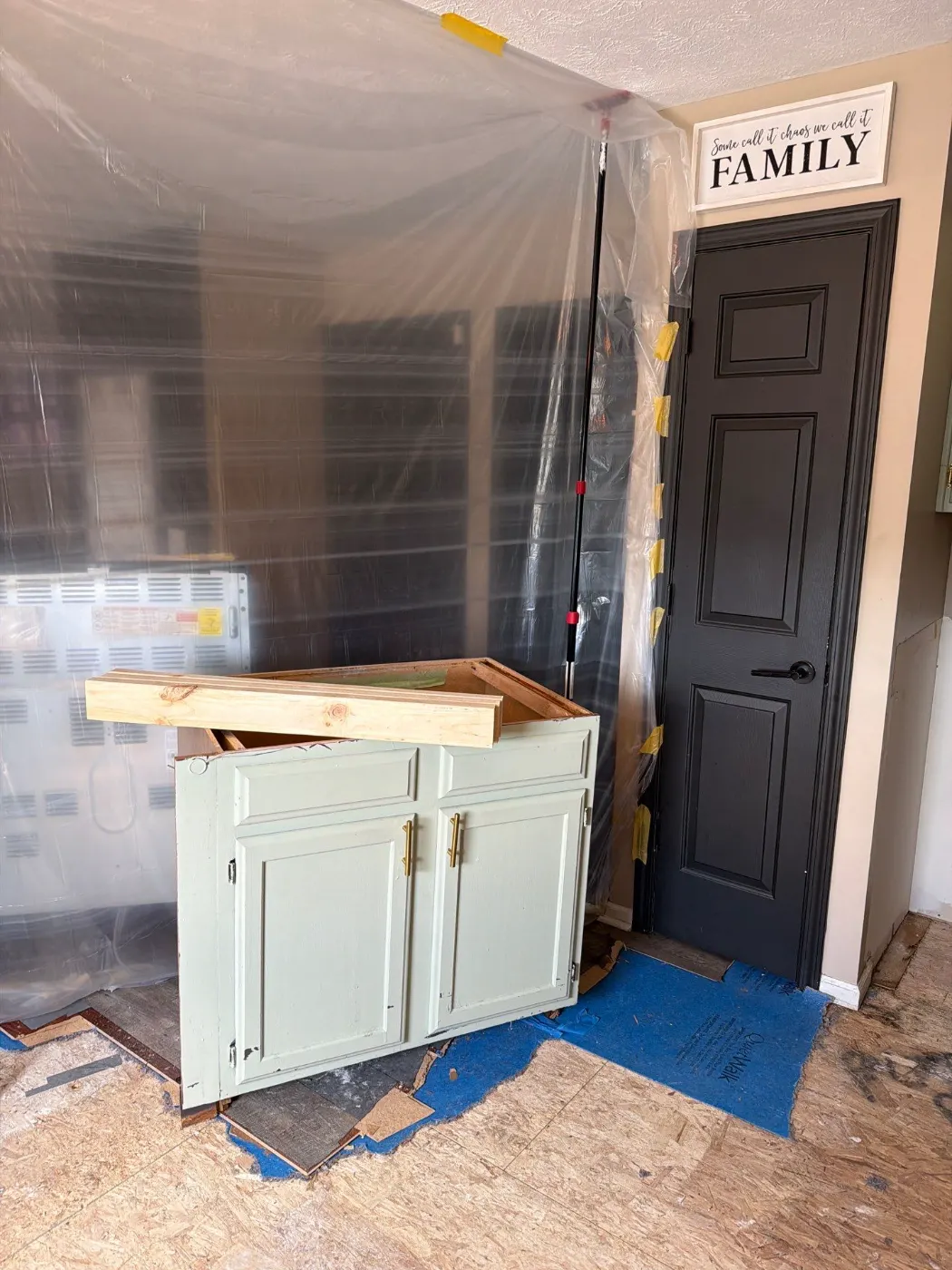
What Gets Done in Crooked Creek Before Anything Gets Rebuilt
The first phase on a Crooked Creek job is moisture assessment and Category determination. A certified technician walks the property, reads walls and floors with thermal imaging and meters, traces the source (broken supply line, dishwasher hose, sewer backup, storm intrusion through a compromised opening), and classifies the water as Category 1, 2, or 3 per IICRC S500. Scope of affected materials is mapped before any equipment is staged. This assessment typically takes one to two hours and produces the written basis for everything that follows, including the scope shared with your insurance adjuster.
The second phase is insurance coordination and documentation. Before mitigation starts, we photo and video every affected area, log meter readings into a written moisture map, and contact your insurance adjuster directly to align scope with coverage. Mitigation actions are justified in writing per industry standard, so there is a clean paper trail when the claim is reviewed. Most Crooked Creek homeowners never see this paperwork move, we handle it with the carrier while drying equipment runs. The goal is a claim that processes without rework requests and without surprise denials on legitimate scope.
The third phase is drying execution and controlled reconstruction. Air movers and dehumidifiers are placed based on structural drying calculations, then monitored daily with logged readings until materials hit dry standard, meaning moisture content matched to unaffected reference materials. Controlled demolition happens only where structure cannot be dried in place. Reconstruction follows: drywall, insulation, flooring, paint, trim, doors, and finish carpentry, all coordinated through the same project. Crooked Creek homeowners get one schedule from emergency call through final walk through, not a months long gap waiting for a separate contractor.
Rapid Emergency Dispatch
Our 24/7 line takes the call and crews mobilize for Crooked Creek with extraction equipment, dehumidifiers, air movers, and meters already on the truck. A certified technician leads the response, so assessment and mitigation begin in the same visit. No second trip to fetch tools.
Category Determination
Water is classified as Category 1, 2, or 3 per IICRC S500 protocol based on source and contamination. Meter readings are logged, affected materials mapped, and a written assessment produced. The Category drives everything downstream, containment, PPE, antimicrobial use, and what materials can be saved versus removed.
Insurance Partnership
We work with your insurance carrier and coordinate directly with your adjuster, providing photo documentation, moisture maps, and scope justification per industry standard. We work with your insurance carrier. We do make sure the scope we perform is the scope your policy supports, with transparent invoicing.
Verified Dry Standard
Drying continues with daily monitored readings until affected materials match the moisture content of unaffected reference areas. Reconstruction does not start until structure is confirmed dry. That verification is what keeps mold from showing up behind new drywall four weeks after the job closes.
The Most Frequent Crooked Creek Water Emergencies
Crooked Creek homes typically call us about these six water damage scenarios.
Washing Machine Hose Burst
An overflow during a wash cycle puts detergent water into the structure, which reads as Category 2 under IICRC S500. That changes what gets dried and what gets removed, and it is the reason the water gets classified before equipment goes in.
Sink Drain and P-Trap Leaks
Under a kitchen or bath sink the joints are hand tight, the trap collects everything, and a slip nut backed off a quarter turn drips on every use. The cabinet floor swells, the base panel delaminates, and the wall behind it stays damp.
Appliance Failures
Dishwashers, washing machines, refrigerator ice maker lines, and water heaters fail without warning. Slow leaks behind appliances can run weeks before the wall behind them shows visible damage.
HVAC Condensate Line and Pan
The secondary pan under an attic unit is a warning device, not a solution. If it is holding water, the primary line is already blocked. Crooked Creek homes find this out in July, usually as a brown ring spreading across a bedroom ceiling.
Frozen Pipe in an Exterior Wall
Kitchen sinks on outside walls, second floor baths over unheated garages, and any run through a rim joist are the usual spots. Opening cabinet doors on the coldest nights and letting a fixture trickle costs nothing and prevents most of these.
Vacant Property Freeze
A loss discovered days after it started is a different scope than one caught in an hour. Water has been standing, humidity has been high, and growth has had time, so this work usually starts with containment before any drying equipment goes in.
The First Hour After Water Gets Into Your Crooked Creek Home
In the first hour, work through this list in order, starting with the water itself. Everything on it can be done with what you already have at home, and each step makes the drying easier once our crew arrives.
1. Close the main valve first
Find the main shutoff and close it all the way. A round handle turns clockwise, and a lever handle turns so it sits across the pipe. If the valve won't move, your water utility can usually shut off service at the meter.
2. Watch the ceiling
If water is coming through a ceiling, keep people out of the room below. A ceiling that sags or bulges can hold a lot of water, and the light fixtures in it may be wet, so turn those circuits off at the panel if you can do it safely.
3. Keep everyone on dry ground
Set up a spot in a dry part of the house for kids and pets while you work through this list. Floodwater and sewage both carry germs, and wet stairs and floors are easy to slip on.
4. Move what you can't replace
Carry keepsakes and important papers to a dry room upstairs. Then pick up anything sitting on a wet floor, starting with cardboard boxes and anything made of paper, since those soak up water quickly.
5. Protect wood floors and furniture
Wood soaks up water quickly, so wipe off what you can and set furniture legs on foil or small blocks. Pick up area rugs so the floor under them can start to dry, and roll heavy ones onto a dry surface.
6. Our crew takes the photos
Our crew takes the damage photos when we arrive, so you can spend the first hour on the steps on this list. We photograph each wet room before anything moves, and those pictures go into the photo report you keep.
7. Let the air reach wet spots
In rooms with clean water, open closet and cabinet doors so air reaches the wet spots. On a hot, sticky day, keep the windows closed and leave the air conditioning on, since it pulls moisture out of the air.
8. Call us and describe what you see
When you call, tell us where the water seems to be coming from and which rooms it reached. Those two details help the crew bring the right equipment on the first trip to your Crooked Creek home.
Call us at any point on this list if something feels unsafe, and the crew will handle the rest when they arrive.
Three Simple Steps
The work follows three steps, and the photo report keeps a record of each one.
Emergency Response
Delay is the only part of this that is genuinely expensive. Every emergency call gets a crew assigned and rolling within 2 hours. Gear is staged in advance, so extraction starts when the crew walks in.
Inspection and the File
You get told what is urgent, what can wait, and what is fine. Nothing gets billed that is not photographed and justified first. Water travels along framing, so the survey follows framing.
Restore and Prove It
Equipment count is calculated from the wet square footage. The file closes with proof, not a promise.
How Our Crew Records the Damage in Your Crooked Creek Home
The photo report lets you see the damage for yourself, room by room, with the crew's photos and the readings behind every recommendation we make in your Crooked Creek home. It starts on the first visit and grows as the drying goes.
The starting point
Every report opens with the starting point of the leak, photographed before anything is moved. Water that came from outside, like a window well or a storm, gets noted the same way, with photos of where it got in.
Moisture readings, room by room
Each affected room gets readings at several spots on the walls and floor. The report lists those readings with photos of where they were taken, so you can see where the wet area ends.
Pictures from start to finish
Photos go into the report at each stage of the job, starting with the damage the crew found when they first walked in. By the end, you have a visual history of the room from wet to dry.
What has to be removed
When a material is too wet to save, the report says so and shows the readings and photos that back it up. You'll know the reason for every cut before the crew makes it.
The drying log
The report keeps a running log of the drying, with the readings from each visit and notes on the equipment in each room. It's the easiest way to see how close your home is to dry.
We walk you through it
Once the first readings are in, we sit down with you and go through the report in plain language. You can see what's going on inside your walls from your living room and ask about anything that doesn't make sense.
A record that's yours
Keep the report with your home records. We document damage with a photo report and walk you through what we found, so you can decide with your insurance company. Your policy will say what's covered, so read it before you call them.
You keep your copy of the photo report after the job, so file it with your other home records once the drying is done.
Questions to Ask a Water Damage Company in Crooked Creek
Clear answers to these questions make it easier to compare restoration companies in Crooked Creek.
What happens if you find mold?
Ask how mold behind walls or under floors gets handled, and whether that work is priced apart from the drying.
Who handles repairs after drying?
Ask who replaces drywall, flooring, paint and trim once the structure is dry, and whether one company can do both stages.
Who will be working in my home?
Ask whether the crew works for the company you called or for a subcontractor, and who's in charge on site each day.
How will you show me it's dry?
Ask for moisture readings on the first visit and the last one, so you can see the numbers reach dry standard.
Can I see an itemized estimate?
Ask for every line item in writing. Many insurers price water losses in Xactimate, so an estimate in that format is easier for an adjuster to review.
Does my policy require a certain company?
Ask your adjuster before you sign anything, and read the work authorization so you know what you're agreeing to.
Indiana Weather Drives Restoration Calls Year Round
Indiana weather drives water damage calls into Crooked Creek on a predictable cycle: January cold snaps that split aging supply lines overnight, spring rain that saturates lots and pushes water through foundations, and severe summer thunderstorms that force water past any compromised opening in the envelope. Each pattern produces a different failure mode and a different restoration scope.
Winter Pipe Bursts
Indiana cold snaps drop temperatures fast, and Crooked Creek's older supply plumbing is exactly the demographic that fails first when a wall cavity freezes overnight. A split copper line at 2 AM can release hundreds of gallons before anyone wakes up. When we get the call, extraction equipment is on the truck and structural drying begins the same visit.
Spring Saturation Flooding
Heavy spring rain in Pike and Washington Townships saturates the soil until water has nowhere to go but laterally through foundation walls and up through slab joints. Sump pumps overwhelmed by sustained rainfall are a recurring call near the creek corridor. We extract, set drying equipment, and assess for sewer backup contamination.
Severe Summer Thunderstorms
Central Indiana summer storms drive wind and intense rain that finds any compromised opening in a building envelope. Water tracks down wall cavities and pools at floor plates before a Crooked Creek homeowner even sees a stain. We map the path with thermal imaging and dry from the inside out.
Ice Dam and Snow Melt Leaks
Freeze thaw cycles build ice at the eave line, and meltwater backs up under shingles until it finds drywall, insulation, and ceiling cavities. The leak shows up days after the cold breaks. We extract the trapped moisture, dry the cavity, and remediate any mold that has already started colonizing wet insulation.
What to Know About Each Crooked Creek Neighborhood
The neighborhoods below are where we answer calls around Crooked Creek, and each one opens to notes on its homes.
Where we respond near Crooked Creek
These are the towns near Crooked Creek where our crews answer water damage calls day and night.
What We Have Learned Working in Crooked Creek
What we know about Crooked Creek homes before we walk in.
About Crooked Creek Homes
Most homes in Crooked Creek were built in the 1950s and 1960s, with a median build year of approximately 1975; some homes date back to the 1920s, while a handful of subdivisions contain custom homes built from the 1990s to the present. Homes from the dominant 1950s,60s era typically contain galvanized or early copper supply plumbing that is now 60,70 years old and at elevated risk of corrosion related failures. The neighborhood is characterized by single level, brick faced ranch style homes, with Colonial Revival and split level models with aluminum siding also present throughout the mid century core. Ranch style homes built on slab or shallow basement foundations are common in this era of Indianapolis construction, and the area's heavily wooded, low lying lots near the Crooked Creek waterway create conditions where sump pump dependency and crawl space moisture intrusion are recurrent concerns.
Where We Work in Crooked Creek
We cover homeowners across Crooked Creek near Crooked Creek Park, WISH Park, Juan Solomon Park, Holiday Park, Fay Biccard Glick Neighborhood Center, Crooked Creek Elementary School, North Central High School, Indianapolis Public Library Michigan Road Branch.
Surrounding Areas We Serve
Our crew also covers Snacks-Guion Creek, Augusta-New Augusta, Delaware Trail, St. Vincent-Greenbriar, Wynnedale-Spring Hills, College Park.
Recent Weather Patterns
The Crooked Creek watershed,which flows through Pike and Washington Townships directly into the White River,has a documented history of surcharging sewers during moderate to heavy rainfalls, with raw sewage discharge into the creek recorded as a recurring water quality and property intrusion risk. Indianapolis and central Indiana have experienced multiple significant flooding and severe storm events, including an epic ice storm and flooding cycle in late 2004,early 2005 that left over 180,000 customers without power, and six major flood events statewide between January 2008 and March 2009, all of which elevate basement backup and surface flooding risk for homes near urban drainageways in the region.
What Our Crew Sees in Crooked Creek
Crooked Creek (the stream) originates in southern Hamilton County, flows through Pike and Washington Townships, and drains an urbanized watershed of approximately 20 square miles before discharging into the White River; homes near the creek corridor face measurable flood plain and stormwater intrusion exposure, and the creek has been dredged periodically due to urbanization driven degradation. The dominant 1950s,60s housing stock means a large share of homes carry original galvanized or early copper plumbing that is decades past typical service life, making supply line failures and slow hidden leaks behind brick faced walls a common loss scenario dispatched to in this neighborhood. Indianapolis's freeze thaw cycle and the area's tree canopy heavy lots contribute to both pipe burst events in winter and foundation moisture intrusion in spring, while the city's aging combined sewer infrastructure creates recurring sewer backup risk during heavy rain events.
The Crooked Creek Area
Crooked Creek has approximately 11,400,12,800 residents with a median household income around $70,000,$71,000 per year, modestly below the Marion County average; roughly 60% of occupied housing units are owner occupied, and the neighborhood is one of Indianapolis's most ethnically and culturally diverse communities. The household profile skews toward families and long term residents, with a median age of approximately 36.
What Happens on a Water Loss in Crooked Creek
Three phases, each with its own standard and its own paperwork.
Emergency response in Crooked Creek starts with what rolls off the truck. Crews arrive with commercial water extraction equipment for standing water and saturated carpet, commercial dehumidifiers sized to the affected square footage, professional air movers staged for directional drying, moisture meters for material readings, and thermal imaging cameras for hidden moisture mapping. Extraction begins promptly on site, structural drying setup happens the same day, and daily monitoring follows with logged meter readings until materials hit dry standard. The homeowner experience is controlled: work zones are contained, plastic protection goes down on unaffected areas, walkways stay clear, and you get clear communication on what happens day by day. This is the standard response for Category 1 and Category 2 losses, supply line breaks, appliance failures, dishwasher overflows, washing machine hose ruptures, where contamination is limited and the focus is fast, clean drying.
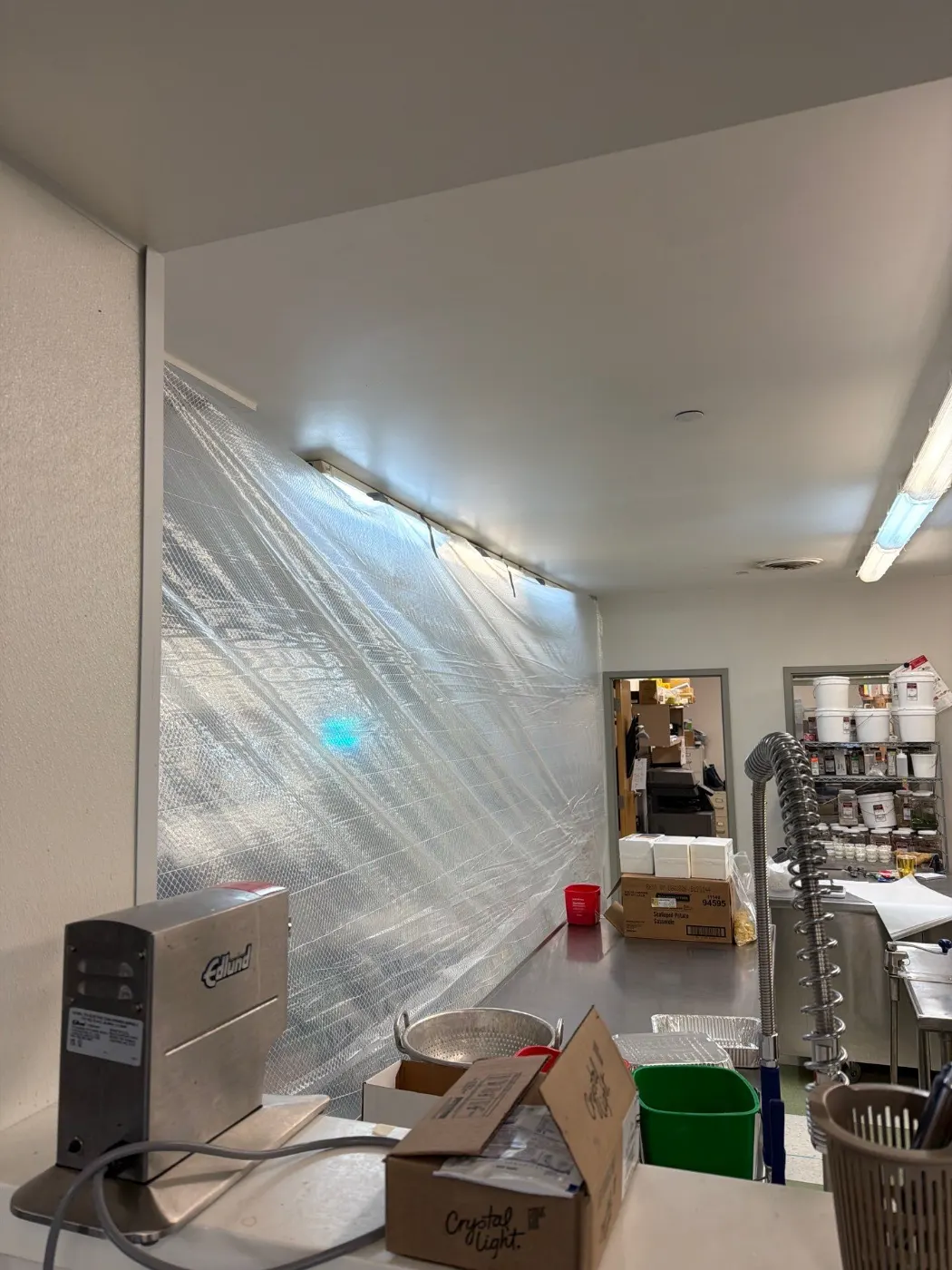
Specialized containment is the protocol when water is Category 3, sewage backups, floodwater, long standing groundwater carrying biological load, or when mold remediation per IICRC S520 enters the scope. Containment goes up first: 6-mil plastic barriers from floor to ceiling, entry points sealed, negative air machines pulling contained air through HEPA filtration before exhausting outside the work zone. Technicians work in full PPE, Tyvek suits, N95 or P100 respirators per S520, nitrile gloves, eye protection. Contaminated porous materials are cut out, bagged, and disposed of per protocol. Antimicrobial is applied to remaining structure, and post remediation verification with air sampling is performed when warranted. This is the phase where IICRC certification matters most. Corner cutting on a Category 3 loss is what causes the long term respiratory and structural problems that show up months later.
Reconstruction picks up where drying ends, and the same crew that extracted and dried carries the rebuild. Drywall is hung, taped, mudded, sanded, primed, and painted. Flooring is replaced, carpet and pad, vinyl plank, hardwood refinish, tile reset. Baseboards and trim go back in. Cabinetry is repaired or replaced, doors rehung, and electrical and plumbing finish work coordinated with licensed trades when needed. The structure is one project number from emergency call through final walk through, one project manager you can reach, one schedule. The alternative most homeowners run into is a handoff: the restoration company packs up after drying, and a separate general contractor is hired for the rebuild. Two crews, two schedules, two billing cycles, and a home sitting in demolition for weeks between phases. We do not do that.
How to Live Around Drying Equipment in Your Crooked Creek Home
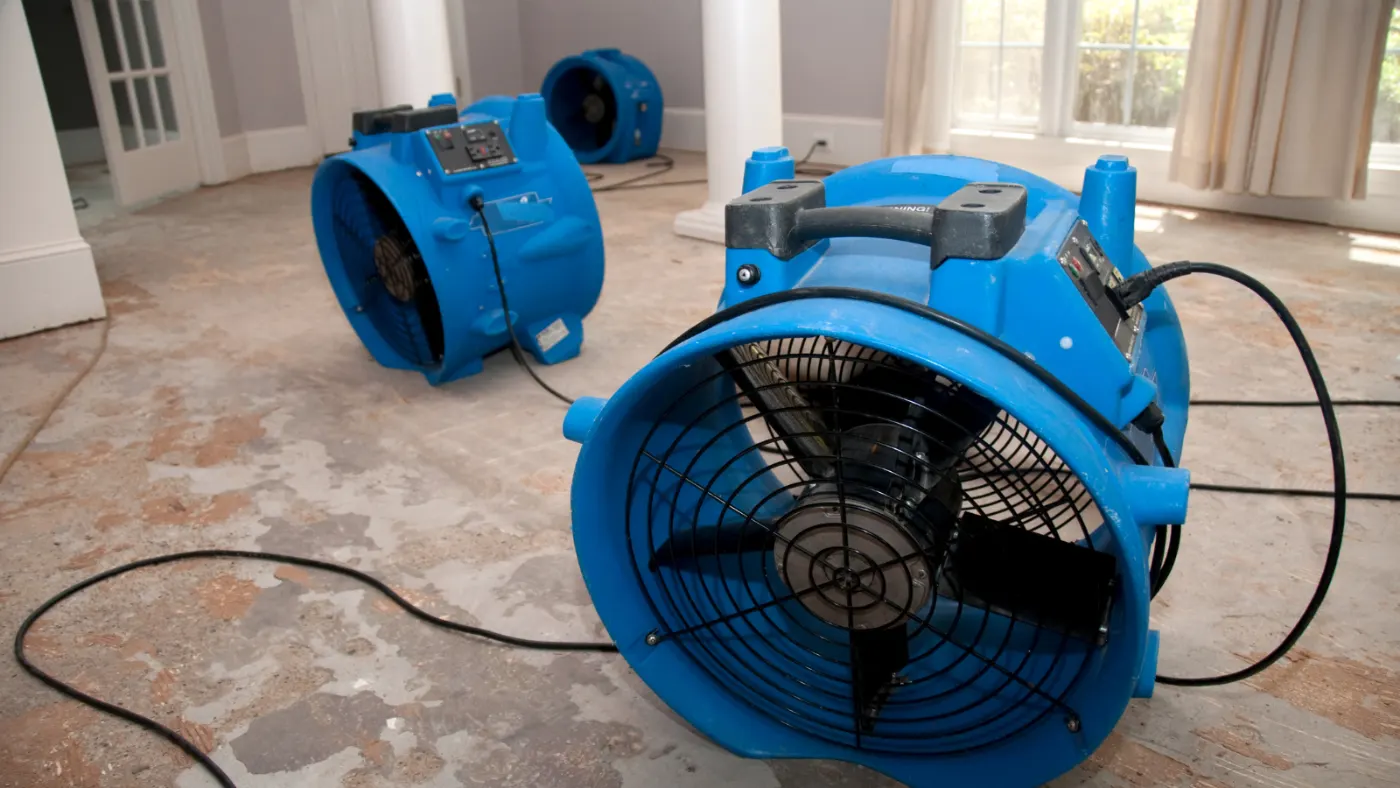
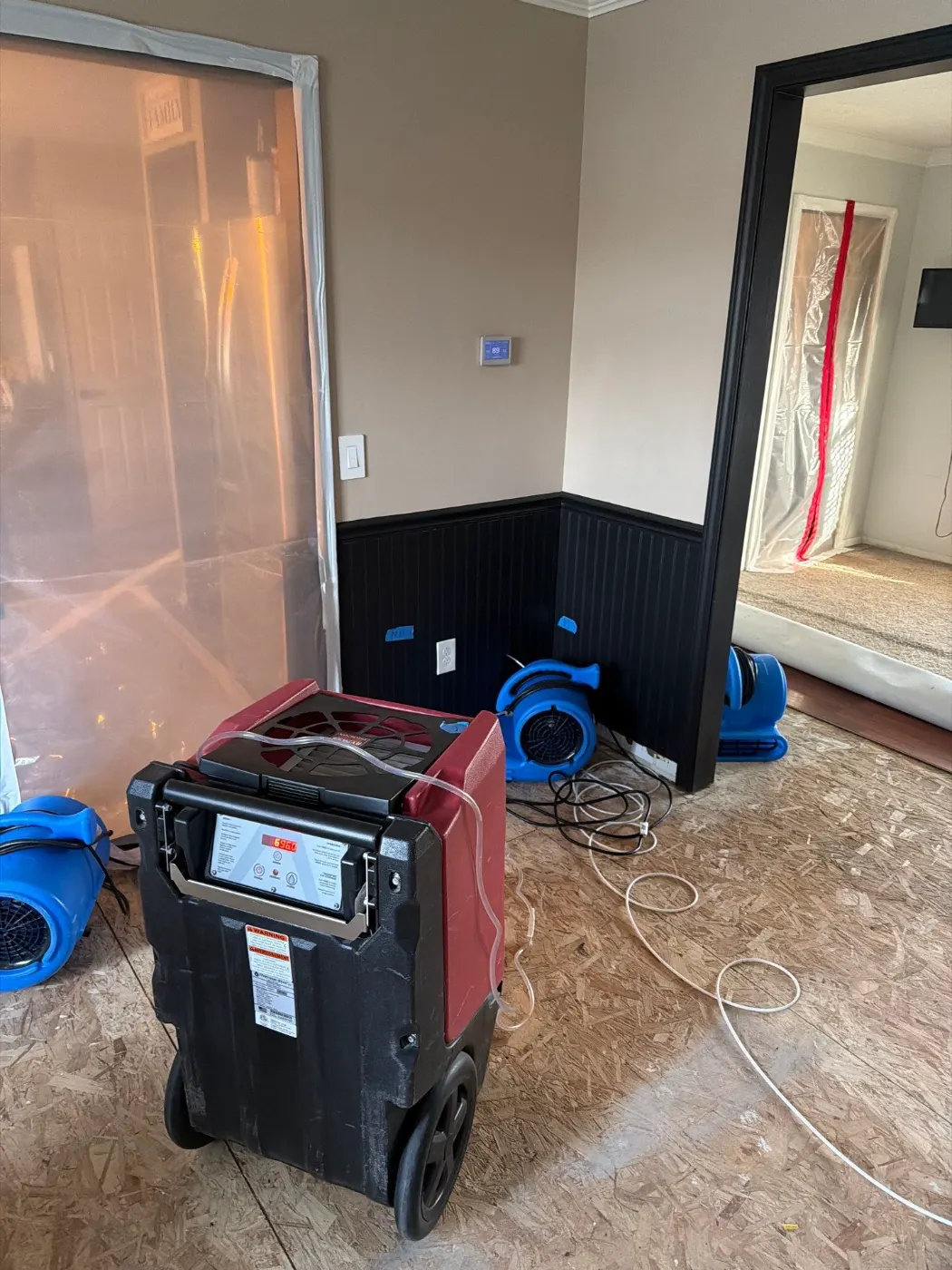
You can stay in the house through most of the dry out while air movers and dehumidifiers run around the clock in the wet rooms. The crew checks them each day until the readings show your home is dry.
The equipment runs around the clock
Air movers and dehumidifiers run day and night, and they make a steady hum you'll hear through the house. The sound means air is moving across the wet surfaces, which is how the moisture gets pulled out.
Leave the settings to the crew
Most units have their own switch or a small control panel. The crew sets those for your rooms, so leave them as they are and let the crew make changes on their next visit.
Closed doors help
When the crew closes off a room, the equipment dries a smaller space faster. Keep those doors shut as much as you can, and pass through quickly when you need to get in.
Watch for tripped breakers
With several machines running, a breaker can trip, especially if you plug a hair dryer or a space heater into the same circuit. Reset it, then call us if it keeps happening.
Safe paths through the house
Equipment and cords can turn a familiar hallway into a tripping spot, especially at night. Leave a light on along the path you use most, and keep small kids away from the units while they run.
Let the crew in each day
The daily check takes a short while, and it decides when the equipment can come out. Plan for someone to be home, or work out a time with the crew so they can get to the wet rooms.
Humidity after the job
CDC recommends keeping indoor humidity as low as you can, no higher than 50 percent all day long. After the equipment leaves, a basement dehumidifier and a working bathroom fan help keep it there.
What happens after drying
Once everything reads dry, the crew pulls the equipment and you get the final readings in your photo report. Any drywall or flooring that came out can be put back after that, and the crew will talk through the rebuild with you.
If something about the setup gets in the way of your household, call us, and the crew will look at it with you on their next visit.
Sources: CDC, About Mold
Water damage response pricing in Crooked Creek
Pricing for Crooked Creek water damage work reflects the local Marion County restoration market and varies with Category of water, square footage affected, and reconstruction scope. Every job starts with a free on site inspection that determines the actual numbers before any work begins or any equipment is staged.
Clear Answers to Common Crooked Creek Concerns
Plain answers to what Crooked Creek homeowners ask before a crew starts work.
Expert Crooked Creek Restoration Crews Available Now
Water is spreading in your Crooked Creek home right now, and every hour it sits expands the damage and the eventual cost. Call our 24/7 emergency line for priority dispatch, free on site inspection with no obligation, and full coordination with your insurance carrier from the first meter reading forward.