Step-by-Step Technical Response
- Shut off water at the main valve (0 to 2 minutes). Locate the main shutoff. In most Crooked Creek homes built after 1980, it sits within 3 feet of where the supply line enters the basement or crawlspace. Turn clockwise until it stops. For PEX manifolds, close the individual zone valve feeding the burst line.
- Kill power to affected circuits (2 to 4 minutes). At the breaker panel, shut off any circuit feeding outlets, lights, or appliances in the wet zone. Do not enter standing water deeper than 1 inch with power live.
- Open the lowest faucet on the affected supply line (4 to 5 minutes). This drains residual pressure and reduces continued leakage from the rupture point.
- Document everything before cleanup (5 to 15 minutes). Take 30 to 50 photos minimum. Capture wide shots, the rupture point, water lines on walls, soaked contents, and serial numbers on damaged appliances. Insurance carriers in Crooked Creek routinely deny portions of claims with insufficient documentation. Our guide on filing a water damage insurance claim covers exactly what adjusters look for.
- Call a licensed restoration contractor (within 30 minutes). Crooked Creek Water Restoration dispatches to Crooked Creek addresses within 60 to 90 minutes of your call, 24/7. Do not wait for the insurance company to assign a vendor; you have the right to choose.
- Begin bulk water extraction (within 1 to 2 hours of break). Use a wet/dry vac for volumes under 5 gallons. Anything larger requires truck-mounted extraction at 150+ PSI and 200+ CFM airflow.
- Remove saturated porous materials. Pad and cushion, wet insulation, and Category 1 water-soaked carpet pad must come out. Carpet face fiber can often be saved with in-place drying if extracted within 24 hours.
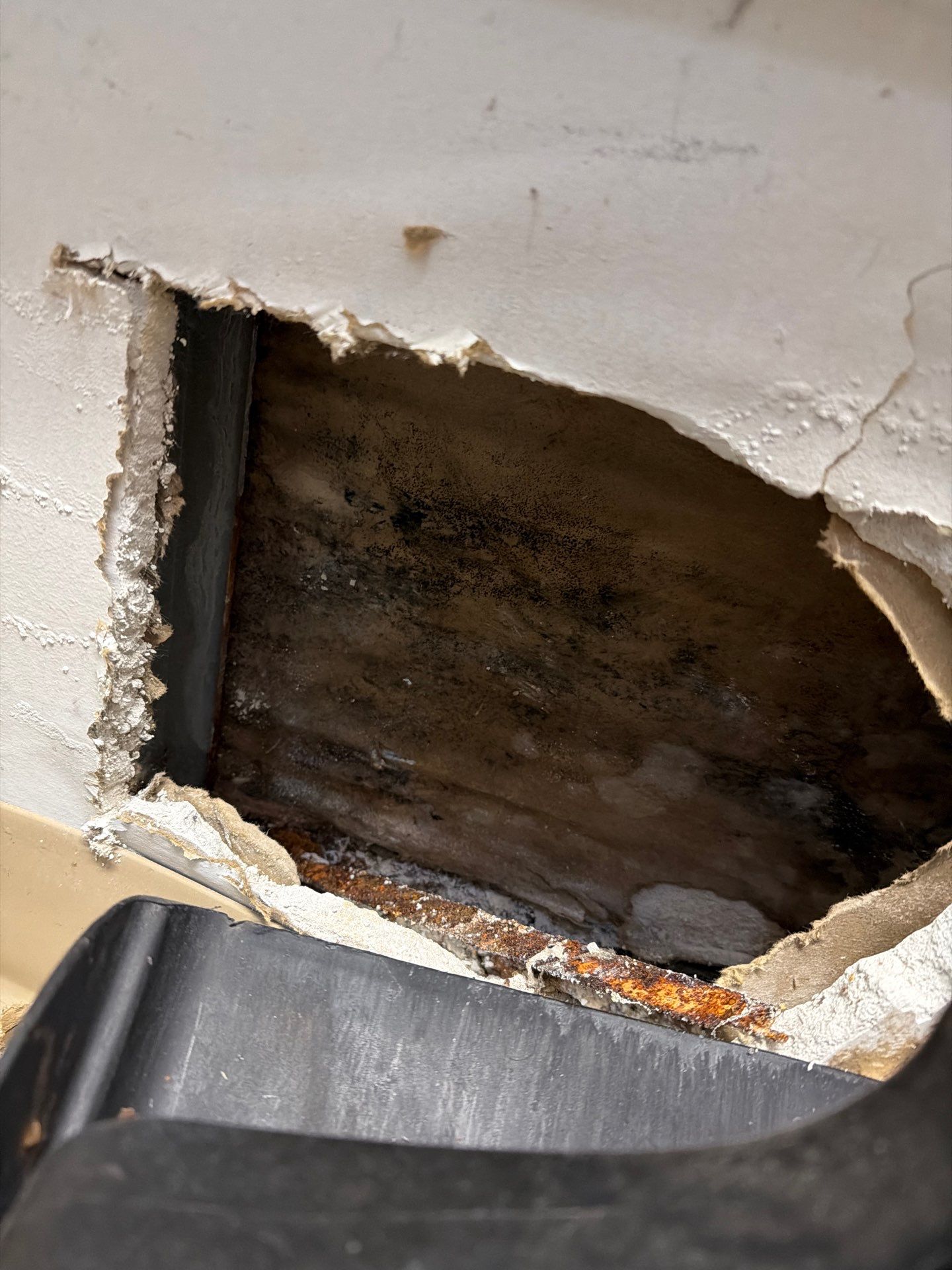
- Make flood cuts where required. Drywall wicks moisture vertically at roughly 1 inch per hour. Cut at 2 feet above the visible water line, or full sheet removal if saturation exceeds 24 inches.
- Set drying equipment per IICRC S500 specifications. Air movers at one per 10 to 16 linear feet of wall. LGR dehumidifiers at one 130-pint unit per 1,000 to 1,500 square feet of affected space. Target 30 to 50 percent relative humidity.
- Monitor daily for 3 to 5 days. Moisture readings on wood framing must drop below 16 percent. Drywall must read below 1.0 on a non-invasive scanner before reconstruction begins.
Common Burst Pipe Failure Points
- Copper pinhole leaks at solder joints: typical in homes 25+ years old, often in attic or crawlspace runs where insulation is thin.
- Frozen PEX or CPVC at exterior walls: failure occurs at the first elbow inside an uninsulated cavity, usually within 18 inches of the rim joist.
- Polybutylene gray pipe ruptures: common in Crooked Creek homes built between 1978 and 1995. Full repipe is the only durable fix.
- Washing machine supply hose burst: 80 percent of failures occur in rubber hoses older than 5 years. Replace with braided stainless every 5 to 7 years.
- Toilet supply line at the angle stop: plastic compression nuts crack under sustained pressure. Replace with brass.
Repair Cost Specifications by Damage Class
Costs below reflect Crooked Creek market rates as of the current service year. Crooked Creek Water Restoration provides itemized estimates that match Xactimate line items your adjuster uses.
- Class 1 (minimal absorption, single room, less than 5 percent of materials wet): $1,200 to $3,000 total. Drying 2 to 3 days.
- Class 2 (entire room, carpet and pad, wicking up walls less than 24 inches): $3,000 to $7,500. Drying 3 to 5 days.
- Class 3 (water from above, saturating ceilings, walls, insulation, and subfloor): $7,500 to $20,000. Drying 5 to 7 days plus reconstruction.
- Class 4 (specialty drying for hardwood, plaster, concrete, or stone): $15,000 to $45,000+. Drying 10 to 21 days.
Line-Item Cost Ranges
- Emergency water extraction: $0.75 to $2.50 per square foot
- Antimicrobial application: $0.20 to $0.60 per square foot
- Drying equipment (per day): $35 to $75 per air mover, $85 to $150 per dehumidifier
- Drywall removal and disposal: $2 to $4 per square foot
- Drywall replacement (hung, taped, mudded, primed): $3 to $6 per square foot
- Carpet pad replacement: $0.60 to $1.10 per square foot
- Hardwood refinishing: $4 to $8 per square foot
- Hardwood replacement: $8 to $15 per square foot
- Plumber repair of burst line: $300 to $1,500 depending on access
- Insulation removal and replacement (R-13 to R-19 batts): $1.50 to $3.25 per square foot
- Cabinet detach and reset: $85 to $175 per linear foot
- Content manipulation and pack-out: $0.40 to $1.20 per square foot of affected area
- Post-restoration verification testing: $250 to $600 per visit
Critical Time Windows
Mold colonization begins between 24 and 48 hours on wet cellulose materials. Our breakdown of the 24 to 48 hour mold window explains the biology and the cutoff points. Hardwood cupping becomes permanent at roughly 72 hours of saturation. Subfloor delamination at 96 hours. Particleboard cabinet kicks swell beyond repair at 48 to 72 hours. Plaster on wood lath holds longer than drywall but fails catastrophically once the keys release, usually between 5 and 10 days of unaddressed saturation. If your burst happened in a finished basement, review our water damage restoration service page for the equipment package we deploy on Category 1 supply-line breaks.
Insurance and Documentation Checklist
- File the claim within 24 hours of the loss. Most Crooked Creek homeowner policies require prompt notice.
- Save the failed pipe section. Adjusters and subrogation teams need physical evidence.
- Request your full policy declarations page. Confirm dwelling coverage, contents coverage, ALE (additional living expense), and any water damage sublimits.
- Do not sign an AOB (assignment of benefits) without reading every clause.
- Request the Xactimate estimate in writing. Compare line by line with your contractor's scope.
- Keep a written log of every contractor, adjuster, and vendor who enters the property. Record names, license numbers, arrival and departure times.
- Track ALE receipts separately. Hotel stays, restaurant meals above your normal grocery baseline, laundromat fees, and pet boarding are typically reimbursable.
- Request a certified moisture log from your restoration contractor. Crooked Creek Water Restoration provides daily readings on every monitored material with timestamp and technician initials.
Coverage Pitfalls to Verify
- Sudden and accidental language: burst pipes are covered; slow seepage over 14 days typically is not.
- Mold sublimit: many Crooked Creek policies cap mold remediation at $5,000 or $10,000 regardless of total claim size.
- Code upgrade coverage (Ordinance or Law): required to bring older electrical, plumbing, or framing up to current code during reconstruction.
- Matching coverage: some policies pay only for the damaged section of flooring, not adjacent rooms with identical material.
- Deductible structure: confirm whether a separate water damage deductible applies on top of the standard policy deductible.