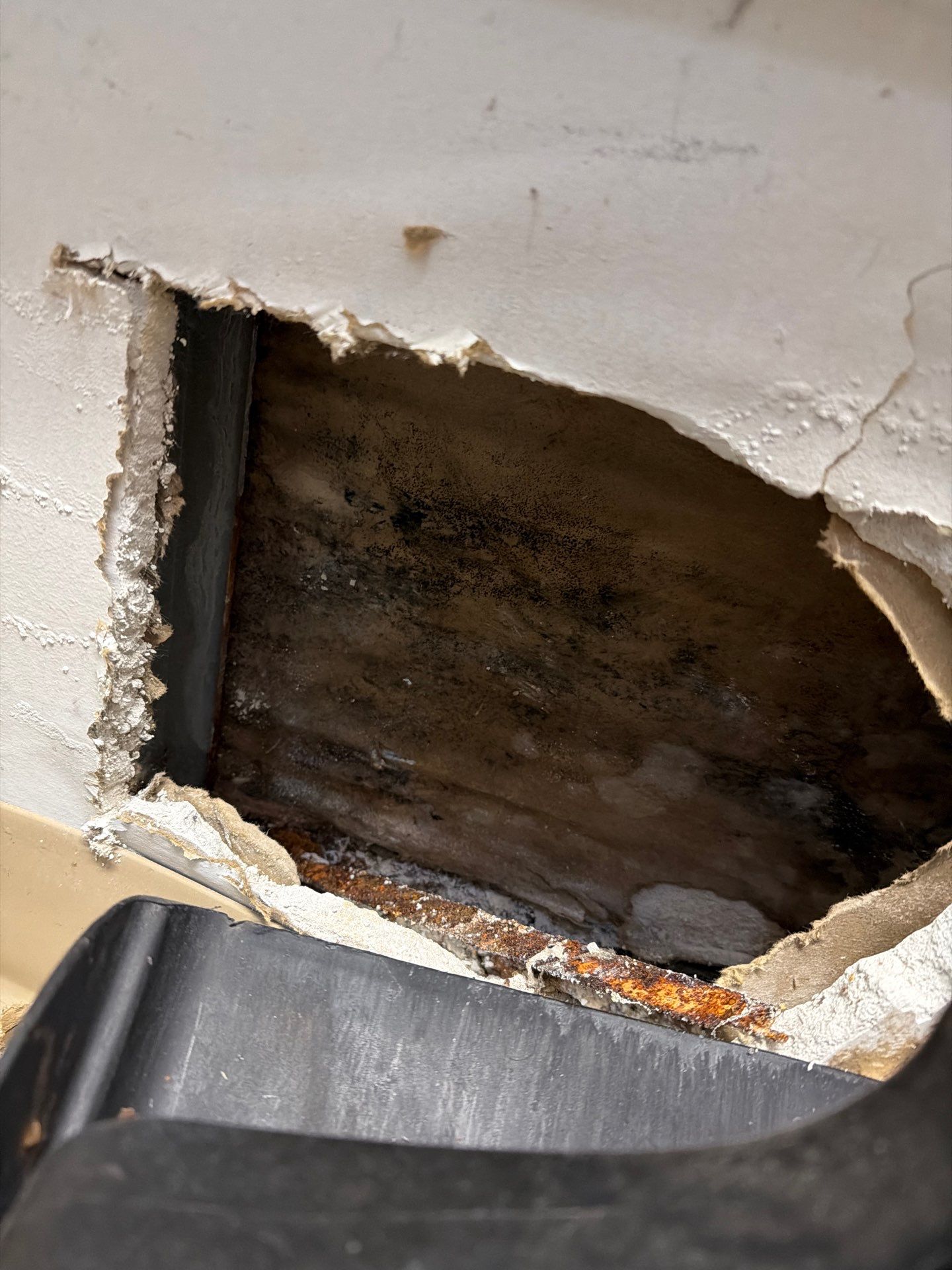
The 7 Categories of Hidden Water Damage Signs
Most hidden leaks fall into one of seven sensory or structural buckets. Run through each list and note anything that matches your home.
- Smell based clues
- Visual surface changes
- Sound and touch signals
- Utility bill and meter anomalies
- Health symptoms inside the home
- Exterior and foundation indicators
- Appliance and fixture warning signs
1. Smell-Based Clues You Should Never Ignore
Your nose catches problems before your eyes do. Trust it.
- Musty, earthy odor in a closed room, especially after rain
- Sour or damp smell near baseboards or under cabinets
- Stronger smell in the morning before HVAC cycles
- Sweet, slightly chemical smell (often microbial growth on drywall)
- Persistent odor that returns within hours of cleaning
- Odor that intensifies when the HVAC fan kicks on (a sign of growth inside ductwork or near the air handler)
If you smell mildew but cannot see it, the source is behind a surface. Our team often finds the leak inside wall cavities using thermal imaging and moisture meters when nothing is visible from the room side.
2. Visual Surface Changes
Walk every room with a flashlight held parallel to the wall. Shadows reveal what flat light hides.
- Paint that bubbles, blisters, or peels in patches
- Yellow, brown, or rust colored rings on ceilings
- Drywall that bows outward or feels soft when pressed
- Wallpaper edges lifting or seams separating
- Hairline cracks running horizontally along seams
- Wood trim that has cupped, swelled, or pulled away from the wall
- Floor tiles that have cracked grout or shifted
- Hardwood planks that are crowning, cupping, or buckling
- Nail pops in drywall, often the first sign of framing movement from moisture
- Dark shadows in corners that do not wipe away with a damp cloth
3. Sound and Touch Signals
Some clues only show up when you slow down and feel for them.
- Hollow or drum like sound when tapping a wall
- Soft, spongy spots in flooring, especially near tubs and dishwashers
- Cold patches on otherwise warm walls in winter
- The sound of running water when no fixtures are on
- Dripping or trickling inside a wall, audible at night
- A faint hiss near a toilet base or supply valve
- Grout lines that feel cool or damp to bare feet
4. Utility Bill and Meter Anomalies
The water meter is the most underused leak detector in your home. Check it tonight.
- Water bill that jumps 15% to 40% with no lifestyle change
- Meter dial spinning when every fixture is off
- Gas or electric bill rising because wet insulation has lost R-value
- HVAC running longer cycles to overcome humidity from a hidden leak
- Indoor humidity reading above 60% even with AC running
- Condensation forming on interior windows in cooler months
A quick test: shut off every water using appliance, write down the meter reading, wait two hours, and read it again. Any movement means water is leaving the system somewhere. Repeat the test overnight for the most accurate result, since small drip leaks can take hours to register on older meters.
5. Health Symptoms That Track With Your Home
If symptoms ease when you leave the house and return when you walk in, the building is the variable.
- New or worsening allergy symptoms indoors
- Persistent cough, sinus pressure, or scratchy throat
- Headaches that lift when you spend time outside
- Skin irritation without a clear cause
- Asthma flare ups in family members or pets
- Eye irritation or watering that worsens in specific rooms
- Fatigue or brain fog that improves on vacation
Microbial growth can begin within 24 to 48 hours of moisture exposure, so health symptoms can show up well before visible mold does. Keep a simple symptom log for two weeks and note which rooms feel worst. Patterns emerge fast.
6. Exterior and Foundation Indicators
Walk the perimeter of your Crooked Creek home once a month. Most foundation and roof leaks announce themselves outside first.
- Efflorescence (white chalky residue) on basement or foundation walls
- Mulch or soil that stays wet for days after rain
- Gutter overflow stains running down siding
- Cracked caulking around windows and door frames
- Shingles that are curled, missing, or shedding excessive granules
- Downspouts that discharge within 4 feet of the foundation
- Pooling water near the AC condenser or hose bib
- Soft, sunken spots in the yard above buried lines
- Stair step cracks in brick or block walls
- Moss or algae growth on north facing siding or roof sections
7. Appliance and Fixture Warning Signs
Roughly 60% of the hidden leaks we find in Crooked Creek start at an appliance or fixture connection.
- Rust, corrosion, or mineral buildup on supply line fittings
- Discoloration on the floor in front of dishwashers or washing machines
- Caulk around tubs and showers that has cracked or pulled away
- Toilet that rocks slightly when you sit down
- Refrigerator water line with kinks or visible wear
- Water heater base with rust streaks or pooling
- Sump pump that runs constantly or never runs at all
- Ice maker that produces smaller cubes or runs slower than usual
- Braided supply hoses older than 8 years (a common failure point)
The 10 minute Monthly Inspection Routine
You do not need special tools. You need a flashlight, a phone camera, and ten minutes.
- Read the water meter, then check it again after 2 hours of no use
- Open every under sink cabinet and feel the back wall
- Inspect washing machine hoses and dishwasher base
- Look at every ceiling under a bathroom or kitchen
- Walk the basement perimeter with a flashlight
- Check around the water heater and furnace condensate line
- Step outside and look at downspout discharge points
- Smell each closet, especially those on exterior walls
- Test the sump pump by lifting the float
- Take photos of anything questionable for comparison next month
Save the photos in a dated folder on your phone. Side by side comparisons over three or four months will catch slow stains that look unchanged day to day.
What Early Detection Actually Saves You
- Targeted repair: $300 to $1,500
- Standard mitigation (dry out only): $1,500 to $4,500
- Full restoration after extended exposure: $8,000 to $25,000+
- Mold remediation added on top: $2,000 to $7,500
- Hardwood floor replacement: $8 to $15 per square foot
- Insurance deductible savings when damage stays under policy limits
Catching a slow supply line leak in week one is a few hundred dollars. Catching it in month three is a renovation. The homeowners who save the most are not the ones with the newest plumbing. They are the ones who walk the house with a flashlight once a month and trust what their nose tells them.
When to Call a Professional vs. DIY Monitor
Not every damp spot is an emergency. Use this triage.
- Monitor for 7 days: Single small stain, no smell, no growth, no soft spots
- Call a plumber: Active drip, identifiable source, no widespread damage
- Call a restoration company: Musty smell with visible staining, soft drywall or flooring, recurring water in basement, or any suspected mold
- Call immediately: Sewage smell, brown water, ceiling sagging, or any standing water
When you do call, ask whether the company is IICRC certified, whether they document moisture readings in writing, and whether they bill insurance directly. Crooked Creek Water Restoration answers yes to all three and dispatches a full water damage restoration team within 2 hours, not a salesperson followed by a separate crew.
Tools Worth Keeping in a Drawer
None of these break the bank, and any one of them can pay for itself the first time it flags a problem.
- A pinless moisture meter ($30 to $60) for spot checking drywall and subfloor
- A basic infrared thermometer for detecting cold spots inside walls
- A hygrometer to track indoor humidity room by room
- Smart water leak sensors placed under sinks, behind toilets, and near the water heater
- A flashlight bright enough to read print at 20 feet