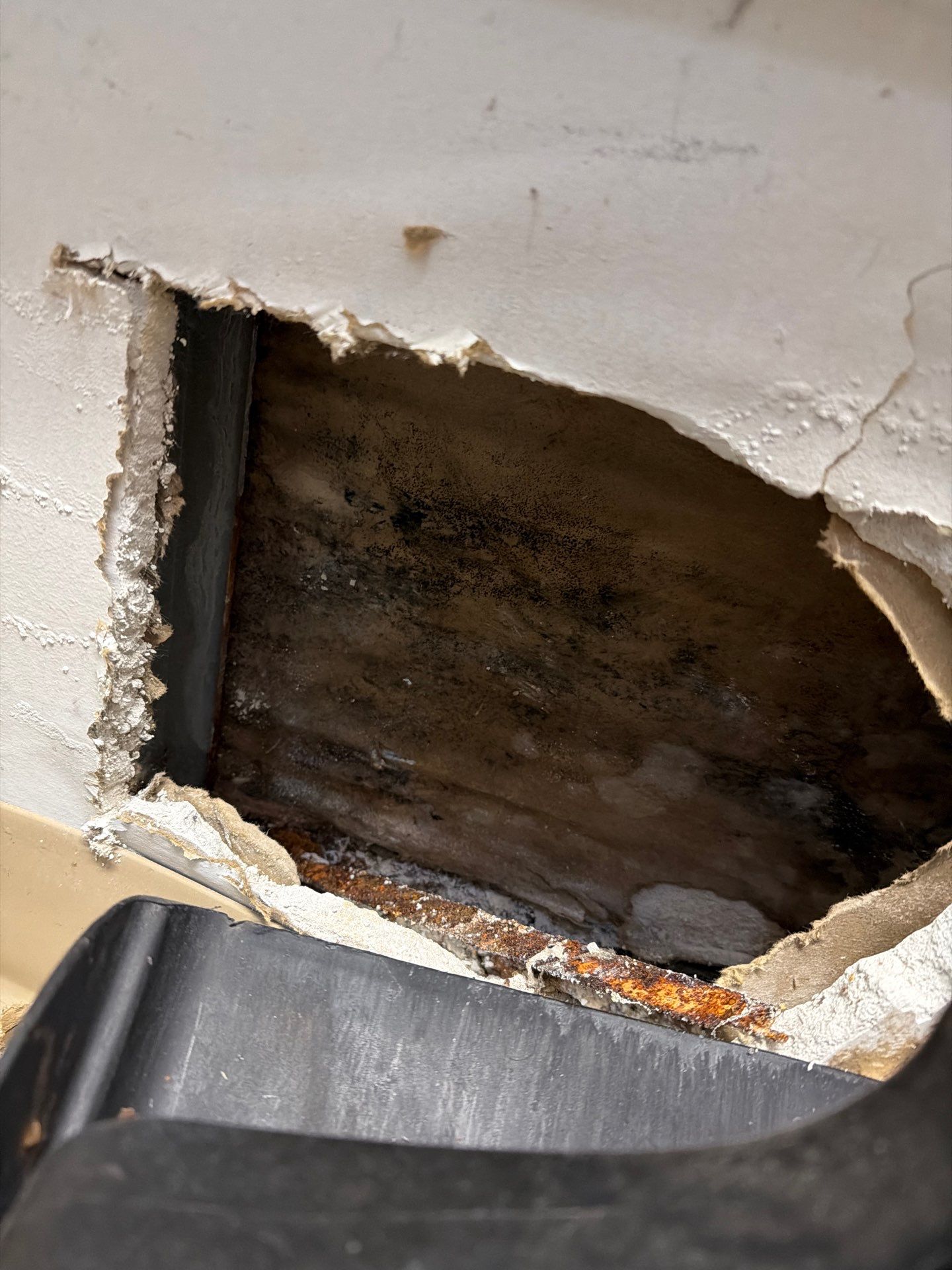
What Emergency Water Mitigation Actually Includes
Mitigation is not the same as repair. Mitigation stops the loss from getting worse. Repair rebuilds what was damaged. Insurance carriers want mitigation done immediately to limit the claim, and most policies require you to take reasonable steps to prevent further damage.
The Six Core Steps
- Inspection and moisture mapping with thermal cameras and pin meters
- Water extraction using truck-mounted or portable units
- Removal of unsalvageable materials such as wet pad, swollen MDF, or saturated insulation
- Antimicrobial application to inhibit bacterial and mold growth
- Structural drying with air movers and low-grain refrigerant dehumidifiers
- Daily moisture monitoring until materials reach dry standard
Why the First 24 Hours Matter Most
Drywall wicks water vertically at roughly one inch per hour. Particleboard cabinet bases swell and lose structural integrity within 12 hours of contact. Carpet pad, which acts like a sponge, holds three to five times its weight in water and pushes moisture down into the subfloor. When Crooked Creek Water Restoration arrives quickly in Crooked Creek, we can often save flooring and baseboards that would be unsalvageable 48 hours later. Speed is not marketing language. It is the single biggest factor in how much of your home survives intact.
IICRC Water Categories and What They Mean for You
The IICRC S500 standard sorts water losses into three categories. The category drives what gets saved, what gets removed, and how aggressive the cleaning protocol must be.
| Category | Source | Risk Level | Typical Action |
|---|---|---|---|
| Cat 1 (Clean) | Supply line, fresh rain, ice maker | Low | Extract and dry in place |
| Cat 2 (Grey) | Dishwasher, washing machine, aquarium | Moderate | Extract, sanitize, possible material removal |
| Cat 3 (Black) | Sewage, ground flood, toilet trap-back | High | Full removal of porous materials, biohazard protocol |
Category can change with time. Clean water sitting more than 48 hours often degrades to Category 2. If you suspect sewage involvement, see our guide to sewage backup cleanup and safe removal before walking through the affected area.
Realistic Drying Timeline
Most homeowners want one number. The honest answer depends on materials, category, and how fast extraction started. Here is a typical breakdown for a Cat 1 kitchen loss of around 400 square feet.
| Day | Activity | What You Will Notice |
|---|---|---|
| Day 1 | Extraction, demo of wet pad, equipment placement | Loud air movers, warm humid air leaving via dehu |
| Day 2 | Moisture readings, equipment repositioning | Surfaces feel cooler, humidity drops |
| Day 3 | Continued drying, possible equipment reduction | Drywall returns to normal color |
| Day 4-5 | Final readings, equipment pickup | Materials at dry standard, you sign completion |
Insurance Documentation We Handle
Your adjuster needs proof of loss and proof of mitigation effort. We document everything to Xactimate standards so your claim does not get kicked back.
- Time-stamped photos of every affected room before, during, and after
- Moisture maps showing readings on day one and at each visit
- Equipment logs with run hours per unit
- Material inventory for any removed items
- Daily drying logs signed by the technician
If you are still figuring out what to tell your adjuster, our breakdown of water damage restoration cost walks through line items most carriers pay without pushback.
Cost Ranges for Crooked Creek Homes
- Small single-room Cat 1 loss: $1,200 to $2,500
- Multi-room Cat 1 or basic Cat 2: $2,500 to $5,500
- Cat 2 with material removal: $4,000 to $8,500
- Cat 3 sewage or large basement flood: $7,000 to $18,000+
- Emergency after-hours dispatch fee: typically $150 to $350, often waived on covered claims
Two variables push costs up faster than anything else. The first is square footage of affected materials, not square footage of the room. A bathroom leak that traveled into an adjacent closet and hallway is billed on all three areas. The second is access. Drying a finished basement with a low ceiling and limited stair access can add 15 to 25 percent in labor because equipment placement takes longer and dehumidifier hose runs get complicated.
Equipment We Bring to a Crooked Creek Job Site
The right machine count matters more than brand names. Underpowered drying turns a 4-day job into a 10-day job and gives mold a head start.
- Truck-mounted extractors pulling 150+ PSI for fast standing water removal
- Submersible pumps for water deeper than 2 inches
- Centrifugal and axial air movers, typically one per 50 to 60 square feet of wet area
- LGR dehumidifiers sized at roughly 100 pints per 1,000 square feet of Class 2 loss
- HEPA air scrubbers for Cat 2 and Cat 3 environments
- Specialty drying systems for hardwood floors, wall cavities, and crawl spaces
Wall cavity drying deserves a closer look. When water travels behind baseboards, we use injection systems that push warm dry air directly into the stud bays through small drilled holes. This avoids the larger drywall cuts called flood cuts, which save you both demo cost and reconstruction time. For hardwood, we deploy mat systems that pull moisture up through the face of the boards before cupping becomes permanent.
When to Call vs When to Wait
- Call now: visible standing water, soaked carpet pad, water touching electrical, sewage odor, ceiling sag
- Call within 24 hours: damp drywall, musty smell, unexplained moisture readings, slow plumbing leak you just found
- Monitor first: small surface spill you caught immediately and dried with towels in under 30 minutes
What To Do Before Crooked Creek Water Restoration Arrives
- Shut off the water supply at the main valve if the source is plumbing
- Kill power to affected rooms at the breaker only if you can reach it safely and dry
- Move photos, electronics, and important papers to a dry room
- Lift drapes off wet floors and place foil or wood blocks under furniture legs
- Do not use a household vacuum to pick up water, and do not run the HVAC if you suspect contamination