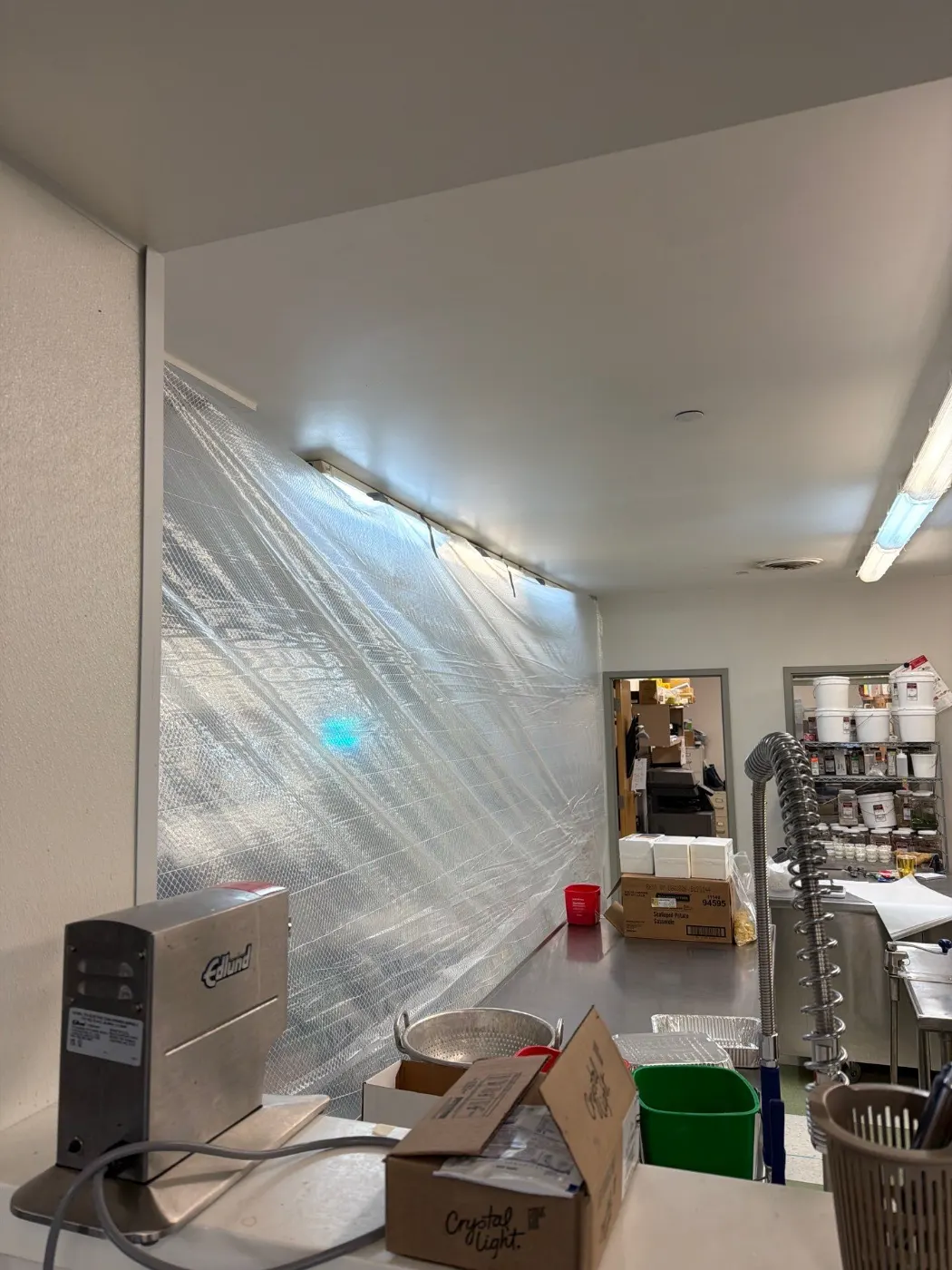
Commercial Storm Damage in Crooked Creek, IN
Crooked Creek Water Restoration dries storm water out of Crooked Creek storefronts and loading docks while the doors stay open for business.
For Commercial Storm Damage in Crooked Creek, Crooked Creek Water Restoration brings the equipment, the certifications, and the paperwork: 24/7 response, written scopes, and insurance claim support. Call (317) 342-7736 for dispatch.
- Service: Commercial Storm Damage for Crooked Creek homeowners
- Service area: Crooked Creek, IN and surrounding areas
- Response time: Around the clock dispatch; Crooked Creek emergencies move to the front of the line
- Licensed and insured (License #RC21100059)
- Serving Crooked Creek, IN since 2018
Commercial Storm Damage Cleanup in Crooked Creek
We'll secure and dry commercial buildings in Crooked Creek after a storm opens the roof or floods a lower level.
Storms Here
The creek of the same name has a flood history that nearby sites should plan around. Ice storms hit this part of Indiana some winters. NWS Indianapolis posts summaries of past storms, which helps when your carrier asks for a date.
We respond to storm calls from businesses anywhere in Crooked Creek, including those around North Central High School and the Indianapolis Public Library Michigan Road Branch. We also handle commercial storm damage in St. Vincent-Greenbriar and College Park.
Commercial Storm Damage for Crooked Creek Businesses
The call you make in the first hour decides most of what follows on a commercial storm loss. A roofer can stop the water and a restoration crew can dry the building, and the two have to be sequenced or you'll pay for drying twice. Crooked Creek Water Restoration takes both pieces on Crooked Creek commercial properties, with a crew dispatched within two hours and one scope covering the dry in and the interior.
A thermal camera points the crew toward cooler surfaces that may be wet, and a moisture meter confirms which ones are. Scope lines come from meter readings and from what the crew sees through open inspection holes. The camera images are kept too, because they show the outline of the wet area on the day your Crooked Creek floor plan was marked up.
Along the glass line of your Crooked Creek building, the crew checks the fan coil cabinets and floor boxes first, because water collects where they sit. The vinyl base is lifted at intervals so a meter can read the wall behind it, and the slab edge is probed. Readings run along the whole glass line, since the water often travels farther than the visible stain.
Tenants file their own claims for contents and business interruption, and those claims need the building side documented to make sense. Crooked Creek Water Restoration gives the property manager a per suite record of what was wet, when equipment ran, and when each space was released. The team stays out of the tenants' claims and gives their adjusters the building facts on request, with you copied.
If you're deciding who to call first, call Crooked Creek Water Restoration. Crooked Creek Water Restoration handles the dry in and the drying underneath it, so the roof and the interior stay coordinated at your Crooked Creek property. Two hour dispatch, day or night, and a moisture log that starts on the first visit.
Signs You Need Commercial Storm Damage Restoration
If you notice any of these in your Crooked Creek building, schedule a free inspection before the issue worsens.
Insulation batts above the ceiling grid that are compressed, matted, or dripping at the edges
Bubbles, blisters, or soft spots underfoot when you walk a low slope membrane
Rust on the metal stud track at the bottom of a wall cavity once an opening is cut
Breakers tripping in a mechanical room or electrical room that sits under a roof penetration
Leak sensors or pit alarms going off in a mechanical room or IT closet during a storm
Daylight visible through a roof penetration curb or around the flashing at a rooftop unit
Roof drain piping dripping at a joint inside a chase or above the ceiling
Light fixtures out in one zone of the ceiling grid after a storm, with the breaker holding
Water lines on the lower walls of a dock office or receiving area
Corrosion on a fire sprinkler line or head where the pipe runs close to the roof deck
How Crooked Creek Water Restoration Handles Commercial Storm Damage
We follow these steps in order on every Crooked Creek job.
Contents and Inventory Protection
Stock and equipment on wet floors get lifted onto blocking or moved to dry ground, with plastic over anything that has to stay. A photo list records what moved and where, which supports each tenant's own claim.
Occupied Space Planning
Suites and corridors that must stay in service get marked on the plan before any equipment is staged, along with where the barriers go. The loud work is scheduled for hours when the space is empty.
Containment and Air Control
Barriers go up at a corridor wall or partition line so one wet bay doesn't shut a whole floor. Negative air machines with HEPA filtration run where materials are coming out, and the crew keeps equipment clear of egress paths.
Cavity Inspection Openings
Where meters or thermal imaging point to hidden water, the crew opens a small inspection hole or lifts a tile. What the probe finds inside decides how much larger the cut needs to be.
Slab and Dock Floor Checks
Concrete at a dock or in a warehouse holds water well after the surface dries, so the crew probes the slab at marked spots and keeps dehumidification and air movement running until the readings level off.
Commercial Storm Damage in Crooked Creek
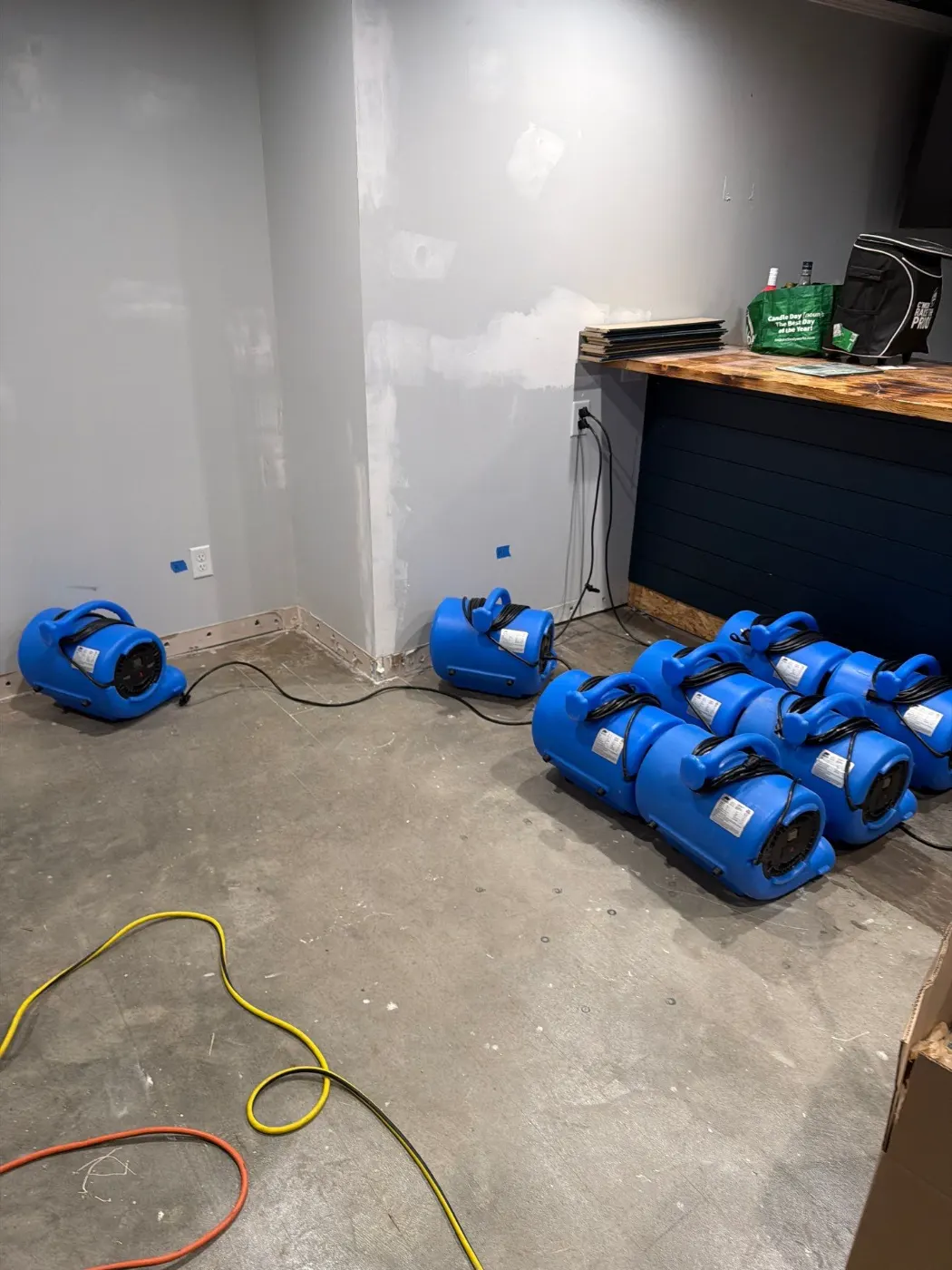
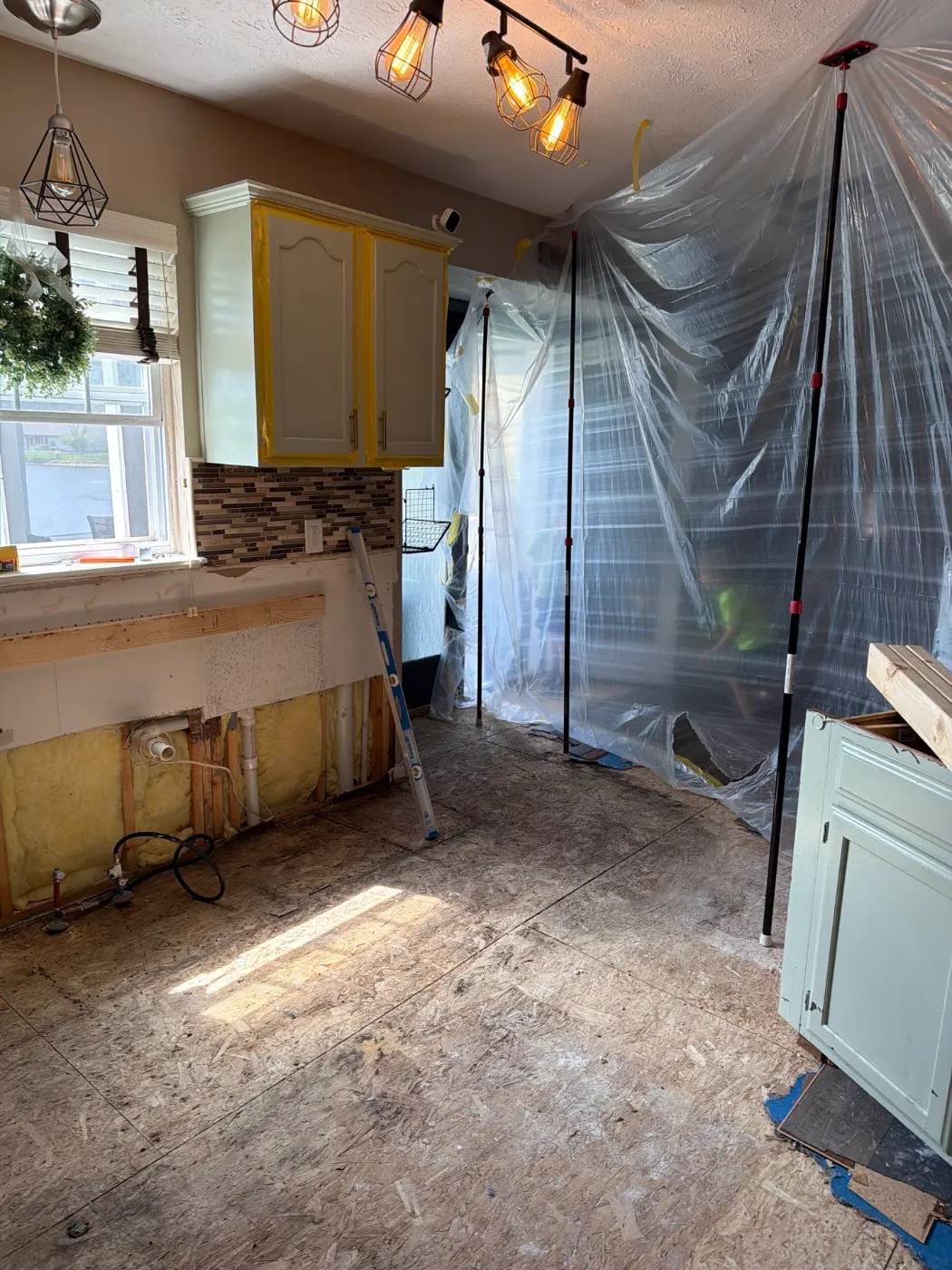
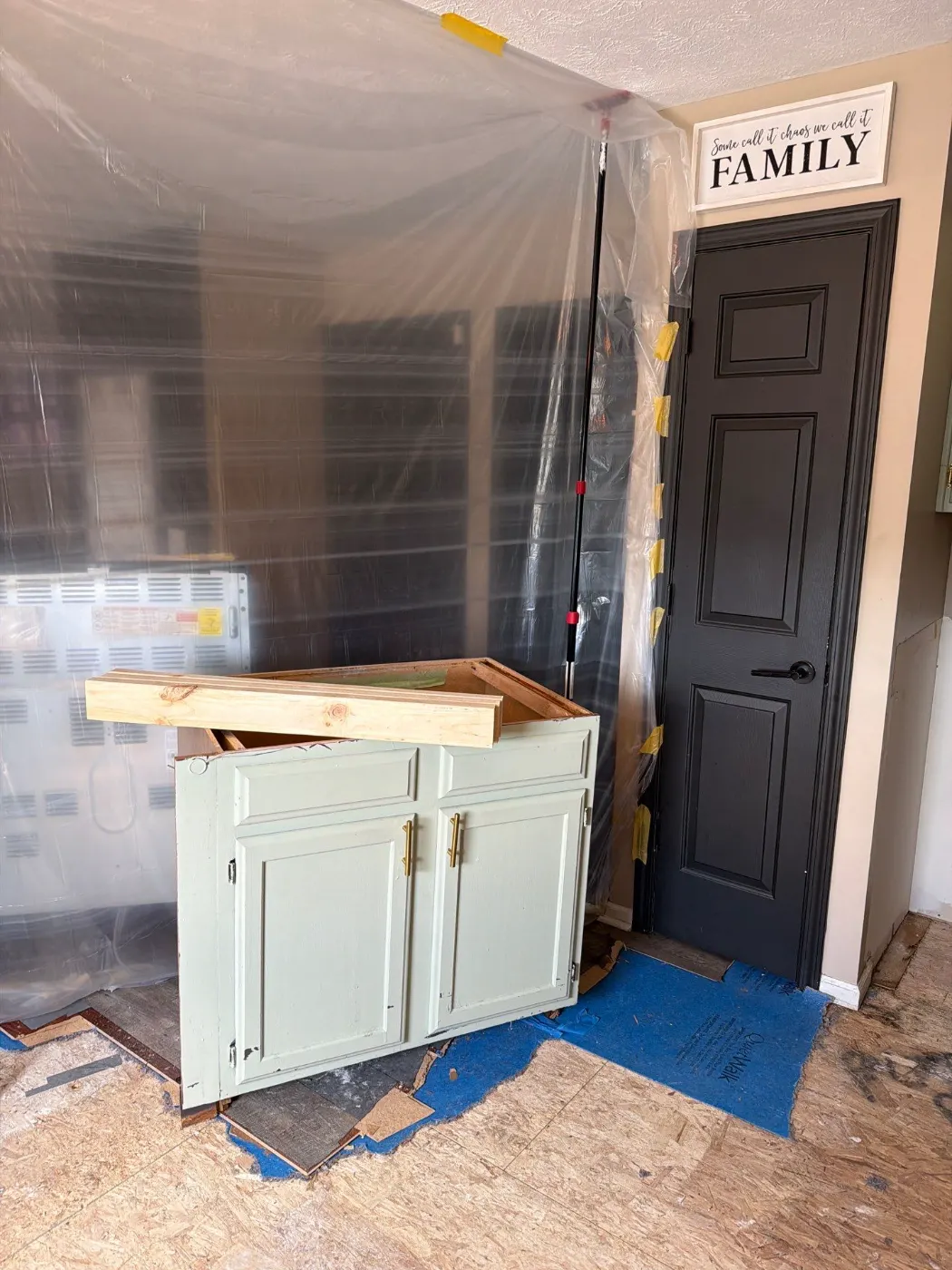
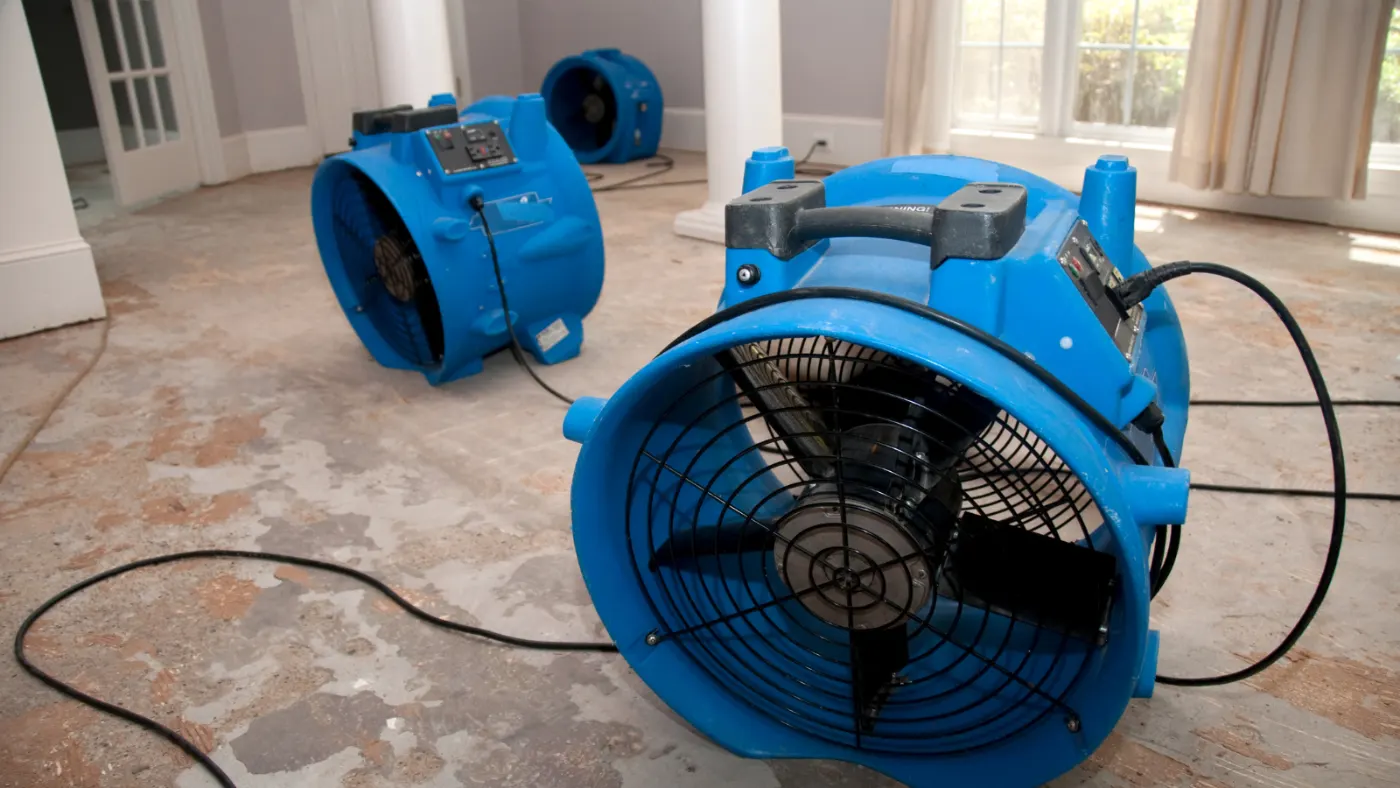
Photographs from real commercial storm damage jobs completed by our crew in Crooked Creek and surrounding areas.
Commercial Storm Damage FAQ
Questions Crooked Creek property managers ask us about commercial storm damage restoration.
Guidance and Standards for Commercial Storm Damage
- The National Weather Service office in Indianapolis posts summaries of recent central Indiana storm and flood events. NWS Indianapolis Event Summaries
- The ANSI/IICRC S500 is the published standard for professional water damage restoration. The current edition is the Fifth Edition, 2021. IICRC S500 Standard
Crooked Creek Neighborhoods We Serve
We take commercial storm damage calls in every part of Crooked Creek. Pick your neighborhood for local details.
Other Restoration Services in Crooked Creek
Crooked Creek Water Restoration handles the full scope of restoration work. Explore our other services below.
Water Damage Restoration in Crooked Creek
24/7 emergency response. IICRC certified water restoration from extraction to full dry out.
Learn more →Basement Flooding in Crooked Creek
Basement water emergencies handled fast. Extraction, drying, mold prevention.
Learn more →Sewage Cleanup in Crooked Creek
Category 3 biohazard cleanup. Full containment, decontamination, structural restoration.
Learn more →Request Commercial Storm Damage Restoration
Reach Us Directly
Our team is available 24/7 for emergencies and ready to schedule inspections during business hours.
Need Immediate Help?
For active water or mold emergencies, call us directly. We are available 24/7.